


Ramtek Fort Temple, Nagpur - Timings, Festivals, History, Darshan, Pooja Timings


 India | Maharashtra | Nagpur
 #9 of 26 Places to Visit in Nagpur
 Distance (From Nagpur): 50 Kms

 Trip Duration (Including Travel): 4 Hours/Half Day

 Transportation Options: Cab


 Travel Tips: None
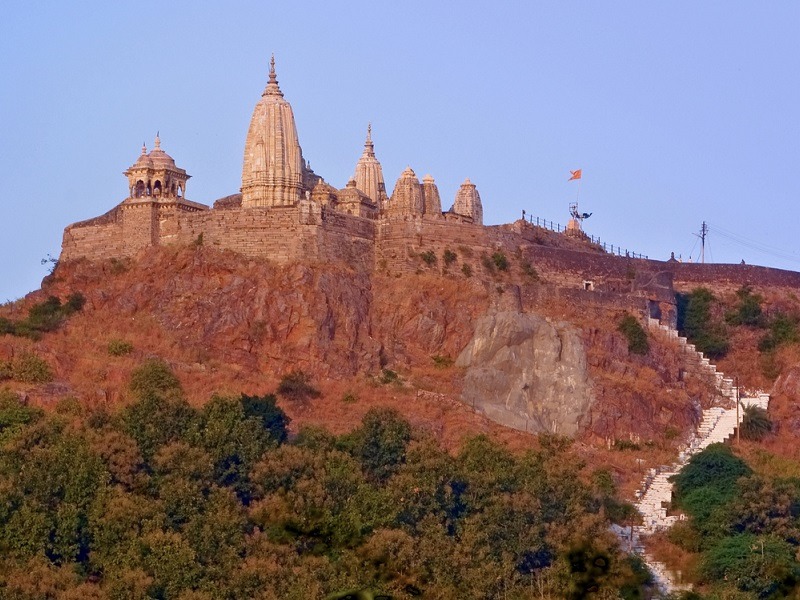
At a distance of 50 km from Nagpur, the Ramtek Fort Temple is a historic hilltop Hindu temple complex situated in Ramtek town of Nagpur district, Maharashtra. Also known as Gad Mandir, it is one of the sacred places associated with the Hindu epic Ramayana in India, and among the most frequented pilgrimage sites near Nagpur.
Dedicated to Lord Rama, the Ramtek Temple is perched on a small hillock situated within the Ramtek Fort. The fort has a rich history, and several rulers, including the Gond and Maratha rulers, have controlled it over the centuries. The present fortified citadel and main Rama temple were largely reconstructed in the 18th century by Raghuji Bhonsle, the Maratha ruler of Nagpur. The fort was also a center of resistance throughout the Indian independence movement and represented a pivotal location in the struggle for freedom.
The Ramtek Fort has a rectangular shape and is built on a hilltop that provides a panoramic view of the surrounding area. The fort has several gates, archways, and defensive structures that reflect characteristics of Maratha architectural design. Furthermore, the fort encompasses numerous religious sanctuaries, notably the Ram Temple, which is believed to have originated during the 14th century. The temple features elaborate sculptural embellishments and serves as a significant destination for both religious pilgrims and visitors.
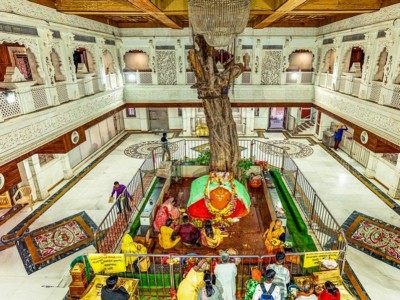
The Rama Temple at Ramtek carries profound mythological importance. According to Hindu mythology, this location housed the Agastya Muni ashram, and Lord Rama, accompanied by Sita and Lakshman, visited him during their 14-year period of exile. Previously, the Ramtek hill was known as Tapogiri, which literally means the hill of Tapas, and acquired its present name from Lord Rama of Ayodhya, who took a Tek or a Vow here to rid of Asuras. Following the destruction of the demons, Agastya Muni entreated Lord Rama, Sita, and Lakshman to manifest on the Tapogiri hill in the form of Jyoti, or divine radiance. An eternal flame observable within the Agastya Muni Ashram is venerated as their manifestation, believed to have burned continuously since the Treta Yuga. The classical Sanskrit poet Kalidasa is believed to have written parts of his epic Meghaduta on these hills, commemorated by a local memorial.
The Ramtek temple was initially constructed by the Yadava rulers during the 12th-14th centuries CE. The contemporary temple structure was erected by Raghu ji Bhosle of Nagpur in the 18th century CE following his victory in the battle of Deogarh. The temple is fashioned from black basalt stone and showcases elaborate carvings and sculptural elements. The temple complex is embellished with numerous shrines, ancient sculptures, and captivating artistic works that illustrate episodes from the Ramayana. A significant feature comprises the black stone representations of Lord Rama, Goddess Sita, and Lord Lakshmana depicted in their forest attire, which are purported to have been unearthed in the adjacent Dudhala tank.Multiple additional temples and shrines are situated within this primary inner compound that are devoted to Valmiki, Ganapati, Lava and Kusa, Kausalya and Sumitra, Dasaratha, Vasistha, and Laksmi-Narayana. Adjacent to the Ram Mandir stands a notable observation point designated as Ram Jharoka, which furnishes an expansive perspective of Ramtek and its surrounding landscape.
Visitors ascending Ramtek Hill commence their journey at the western end of Ambala Lake. The lake or tank is bordered by eight stone ghats and encircled by temples predominantly dating to the Maratha period. From the western terminus of Ambala Lake, a succession of stairs ascends the hill toward the summit. The preliminary staircase leads to the Narasimha temples, the Dhumreshwar Mahadev temple, a mosque, and an antiquated tank with a dharamshala, subsequently leading to the outermost entrance of the citadel, the Varaha Darwaza.
The Kevala Narasimha temple, attributed to the initial half of the 500s CE, was constructed by Camunda, a daughter of Prabhavatigupta. The edifice comprises a garbhagriha and a mandapa featuring a flat roof. The garbhagriha contains the idol of Narasimha portrayed with two arms and positioned in the composed, benevolent yet authoritative posture of a monarch. Approximately 100 m north of the Kevala Narasimha temple exists a comparable structure recognized locally as the Rudra Narasimha temple. It is somewhat smaller than the Kevala Narasimha Narasimha temple. It has a giant-sized Ugra Narsimha Murti almost filling the Garbhgriha. Halfway on your way to the Gadh Mandir, you find a small Varaha temple on large open premises.
During festivals like Ram Navami and Kartik Purnima, the temple comes alive with grand processions, devotional songs, and rituals, making it an unforgettable experience for visitors.
Timings: 7 AM - 7 PM
Entry: Free