


Wai, Panchgani - Timings, Festivals, History, Darshan, Pooja Timings


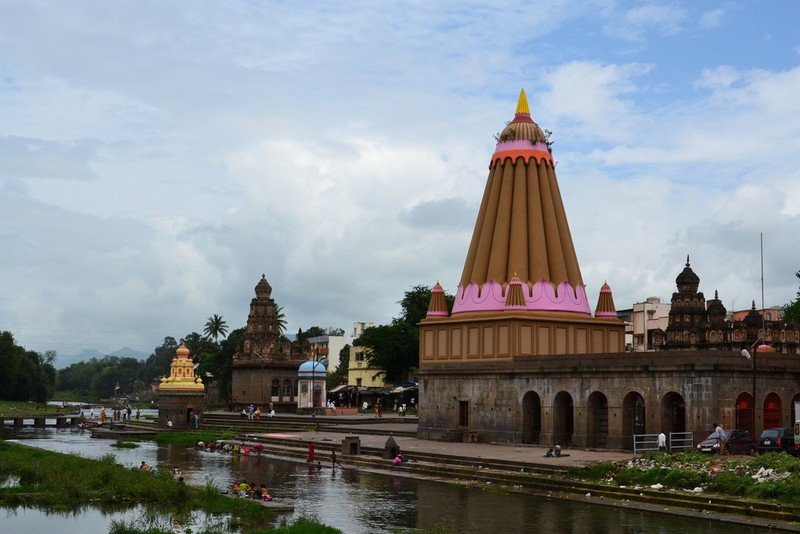
Photo Credit: Flickr

 #10 of 16 Places to Visit in Panchgani
 Distance (From Panchgani Bus Station): 13 Kms

 Trip Duration (Including Travel): 4 Hours/Half Day

 Transportation Options: Bus / Cab


 Travel Tips: None
About Wai
At a distance of 13 Km from Panchgani, 35 km from Satara & 88 km from Pune, Wai is a small town in the Satara district of Maharashtra. It is one of the ideal places to visit near Pune for a day trip. Nestled along the banks of the Krishna River, Wai holds significant historical importance. It is the birthplace of two notable Maratha Brahmin queens: Rani Lakshmibai of Jhansi and Rani Gopikabai, the spouse of Nanasaheb Peshwa. With more than 100 temples, it is known aptly as the Dakshin Kashi. In recent years, Wai has emerged as a favored destination for the production of Bollywood and Marathi films, with more than 300 movies filmed in and around the area. Additionally, Wai is known as Charanpur in the acclaimed film Swades.
History of Wai
Wai is traditionally regarded as Viratnagari, the location associated with the thirteenth year of the Pandavas' exile. Information about Wai remains sparse until the period of Muslim rule. Between 1453 and 1480, Wai is noted as a military outpost for the Bahamanis, from which troops were dispatched for various expeditions. By around 1648, Wai served as the headquarters for the Bijapur mokasadar, or manager. Afzal Khan, a renowned general from Bijapur, held the position of subhedar in Wai for a time. When Shivaji proclaimed independence for the Maratha region, he seized control of Wai, which also marked the site of Afzalkhan's final encampment before his death in a confrontation with Shivaji at Pratapgad in 1659.
Following this event, Wai came under Maratha control. In 1687, it faced an assault from Bijapur's general Sharjakhan, who was ultimately defeated by the Maratha general Hambirrav Mohite, although Mohite lost his life in the battle. This victory allowed the Marathas to reclaim much of the territory they had previously ceded to the Mughals. The Mughals regained control of Wai in 1690 during the reign of Rajaram (1689-1700), but it was soon recaptured by the Marathas under Santaji Ghorpade, a senior member of the Kapshi Ghorpade family. Ramchandrapant, a prominent figure of the era who later became a minister, devised a plan that enabled Santaji to surprise the faujdar of Wai, capturing him along with his troops and establishing a Maratha presence in the town. Subsequently, Wai came under the control of the Peshwas, but in 1753, it was occupied by Tarabai, the widow of Rajaram, with the support of 5,000 Ramoshis and Marathas.
Around 1790, the Raste family of Wai began to gain prominence at the Peshwa's court in Poona, aligning themselves with the ministerial faction against the advances of Mahadji Shinde. In October 1791, Wai was owned by the elder brother of the Raste family, who had constructed several well-crafted stucco temples.
Things to do in Wai
Wai is renowned for its ghats along the banks of the Krishna River and its temples, particularly the Dholya Ganapati Temple located at Ganapati Ghat. This temple, the largest and most impressive in Wai, was constructed in 1762 by Sardar Ganpatrao Bhikaji Raste on Krishna Ghat in Ganpati Alley. The temple features a grand hall with arches on three sides, housing a seated stone statue of Ganapati that measures 10 feet in height and 8 feet in length. Built in the Hemadpanti architectural style, the Ganesha idol within the temple is carved from a single stone. In addition to Mahaganpati, other temples such as Kashi Vishweshwar, Gangarameshwar, and Govind Rameshwar can be found at this ghat, with Kashi Vishweshwar Temple located nearby, showcasing a magnificent Shivlinga at its center.
Visitors can also explore the Chakreshwar, Chimneshwar, Kaunteshwar/Harihareshwar, and Kaleshwar temples near Brahmanshahi Ghat. Govardhan Sanstha Ghat features Krishna Mandir, while Ramdoh Ghat is home to the Rameshwar Temple, Ramkund, and Chilavali Devi Temple. Gangapuri Ghat includes temples dedicated to Lord Shiva, Dwarka, Bahiroba, and Dattatray. Approximately 12 kilometers from Wai, the 400-year-old Mandhradevi Kalubai Temple is situated on a hill that rises 718 meters (2,356 feet) above sea level.
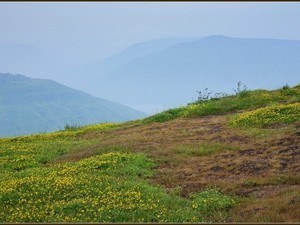
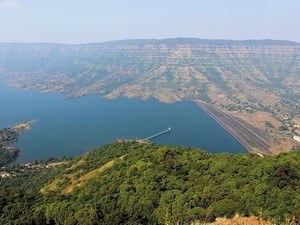
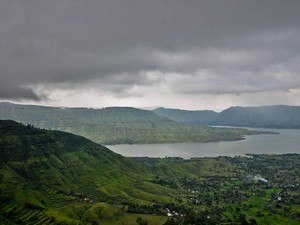
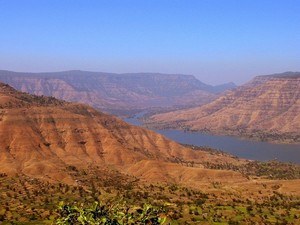
Among the scenic highlights of Wai is Dhom Lake, a popular location where numerous Bollywood films have been filmed. Visitors can set up tents, enjoy barbecues, and unwind by the lake, which permits swimming and fishing. Located about 7 kilometers from Wai, the Wai Caves consist of nine Buddhist caves situated at Lohare is another must-visit places in Wai. For adventure enthusiasts, nearby attractions include Kamalgad Fort, Vairatgad, and Pandavgad. Additionally, approximately 2 kilometers from Wai, in Panchgani Ghat, there is a silk production center that cultivates mulberry over an acre, hosting silkworms.
Festivals of Wai
The Krishnamai Utsav stands out as the most significant festival in Wai, honoring the Krishna River. Held each year during the month of Magh, this celebration features the veneration of the river goddess's idol, accompanied by processions that include drumming and traditional dance performances. It is believed that Chhatrapati Shivaji Maharaj initiated this festival, which takes place at each ghat for four to eight days. Furthermore, Wai is home to the Vasant Lecture Series, an important annual event.
Dress Code & Other Restrictions of Wai
Dholya Ganpati Temple in Wai does not enforce a strict dress code; however, it is advisable to wear modest attire that covers the upper arms and legs as a mark of respect. Men are encouraged to don a dhoti or pajama along with an appropriate upper garment, or to wear formal trousers and shirts. Women may choose to wear a saree, half saree, or chudidhars. It is recommended to avoid modern clothing such as mini-skirts, shorts, and sleeveless tops while visiting the temple.
Non-Hindus are generally allowed in the Dholya Ganpati Temple in Wai, Maharashtra. The temple is a popular tourist destination and welcomes visitors of all faiths. While entry to the inner sanctum may be restricted, the temple grounds and surrounding areas are open to everyone.
Wai Ganpati Temple Timings
Monday: 6 AM - 9 PM
Tuesday: 6 AM - 9 PM
Wednesday: 6 AM - 9 PM
Thursday: 6 AM - 9 PM
Friday: 6 AM - 9 PM
Saturday: 6 AM - 9 PM
Sunday: 6 AM - 9 PM
Wai Ganpati Temple Entry Fee
Entry is Free
Best Time to Visit Wai
The optimal time to visit Wai is from October to February, when the weather is enjoyable and suitable for exploring temples, and forts. Additionally, the monsoon season, which lasts from June to August, offers a unique experience as the river flows vigorously and the rains enhance the landscape's lushness. However, it is important to note that heavy rainfall can occasionally pose challenges for travel and sightseeing. It is advisable to steer clear of visiting Wai during the summer months because of the intense heat.
How to Reach Wai
Pune International Airport is the nearest airport, which is about 98 Km from Wai and has daily flights from Mumbai, Bangalore, Hyderabad, Chennai, Kochi, Delhi, Kolkata, and Goa. Satara is the nearest railhead, which is about 39 Km from Wai. It has trains from Goa, Delhi, Mumbai, Pune, Hubli, Kochi, Kolhapur, Tirunelveli, Mysore, Pondicherry, Bangalore, Ahmedabad, Gorakhpur, Ajmer, and Jodhpur. Wai is well connected by bus with Mahabaleshwar, Mumbai, Pune, Panchgani, and Satara.