


Machchu Dam, Wankaner - Timings, Entry Fee, Boating, Best Time to Visit



 #4 of 5 Places to Visit in Wankaner
 Distance (From Wankaner): 30 Kms

 Trip Duration (Including Travel): 4 Hours/Half Day

 Transportation Options: Bus / Cab


 Travel Tips: None
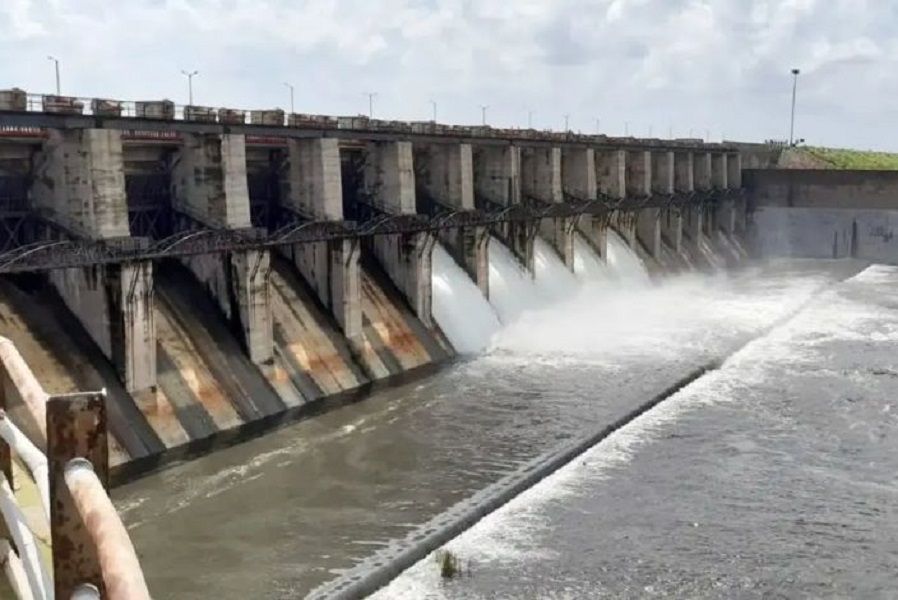
At a distance of 30 Km from Wankaner, Machchu Dam is an earth fill dam situated near Morbi town of Gujarat. It is one of the prominent places to visit as part of the Wankaner packages.
The Machchu Dam was constructed across the Machchu River, which originates from the Madla hills and eventually emptied into the little Rann of Kutch. In the Morbi district, there are two dams built over the Machchu River. The first dam, known as Machhu I Dam, was completed in 1959 and has a catchment area of 730 square kilometers. The Machchu II Dam was built downstream of Machchu I Dam in 1972, featuring a catchment area of 1,929 square kilometers.
Machchu Dam II was designed to support an irrigation scheme. Given the historical prevalence of drought in the Saurashtra region, the primary focus during its design was on water supply rather than flood control. The dam included a masonry spillway measuring 206 meters, which comprised 18 sluice gates across the river section, along with extensive earthen embankments on both sides. The spillway was designed to handle a capacity of 5,663 cubic meters per second. The lengths of the embankments were 2,345 meters on the left side and 1,399 meters on the right side. The dam's gross holding capacity is 100.41 cubic millimeters of water, while its live holding capacity is 90.73 cubic millimeters.
On 11 August 1979, the Machchu Dam II experienced a catastrophic failure, unleashing a torrent of water through the town of Morbi. This failure was attributed to excessive rainfall and severe flooding, which led to the collapse of the earthen walls of the 4-kilometer-long Machchhu-2 dam. The exact number of lives lost remains uncertain, with estimates varying from 1,800 to as many as 25,000. Ultimately, Machchu Dam II was reconstructed with a spillway capacity of 872,000 cubic feet per second and was completed in 1989. It continues to operate to this day.
Timings: 6 AM - 6 PM
Entry: Free