


Hanuman Garhi, Ayodhya - Timings, Festivals, History, Darshan, Pooja Timings


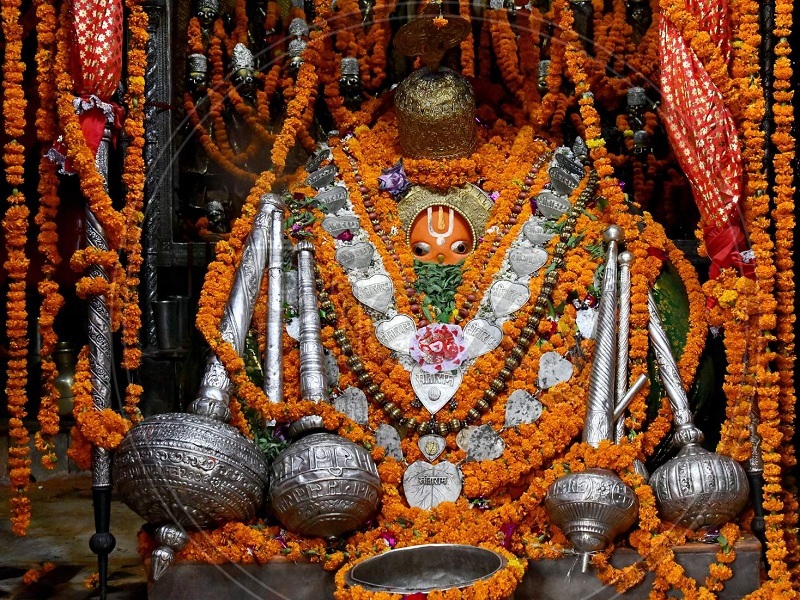
Photo Credit: Flickr

 #8 of 18 Places to Visit in Ayodhya
 Distance (From Ayodhya Junction): 1.5 Kms

 Trip Duration (Including Travel): 30 Mins
 Place Location: In The Sai Nagar Area
 Transportation Options: Cab / Auto


 Travel Tips: None
About Hanuman Garhi Temple
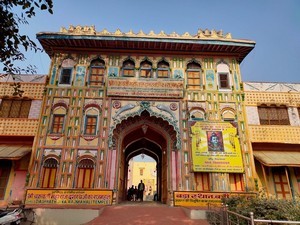
At a distance of 1.5 Km from Ayodhya Junction, Hanuman Garhi is a 10th-century Hindu temple located in the Sai Nagar area of Ayodhya, Uttar Pradesh, India. Situated in the center of the town, the Hanuman Garhi temple is dedicated to the Hindu God, Hanuman. It is one of the popular temple complexes of Hanuman in North India, and among the must-include places in Ayodhya pilgrimage tour packages. This temple is under the administration of Bairagi Akhara named Nirvani Ani Akhara.
History of Hanuman Garhi Temple
While the precise origin remains a topic of discussion, certain narratives indicate that the temple was constructed in the 10th century, possibly by King Jagat Singh, who was the sibling of King Vikramaditya. However, Aurangzeb demolished the temple and erected a Mosque in its place. Subsequently, the Bairag seized the territory by overcoming Nawab Shujauddula, the ruler of Awadh. They dismantled the Mosque and established a new temple dedicated to Lord Hanuman. Some Muslims believed that Hanuman Garhi was constructed on the site of a mosque, which led to multiple attempts to destroy the temple, all of which were unsuccessful. Historical accounts suggest that the Nawab of Awadh, Safdar Jung, played a significant role in the temple's enhancement. His son, afflicted with leprosy, was cured by ash from the temple, prompting the Nawab to support its patronage and the erection of a fort-like edifice surrounding the temple. In the 19th century, the Nawab of Awadh allocated land revenue for the temple's advancement, amidst various disputes and resolutions concerning its administration.
Mythology of Hanuman Garhi Temple
Hanuman Garhi is regarded as one of the most significant temples in Ayodhya, as it is a tradition to visit Hanuman Garhi prior to going to the Ram Temple in Ayodhya. It is said that Lord Hanuman resided in a cave here and protected the Janambhoomi or Ramkot. According to legend, the temple is located at the site where Lord Hanuman would meditate. Another tale suggests that this temple was established by Saint Tulsidas after he was denied entry into Ayodhya due to his low-caste background. He prayed to Lord Hanuman and was granted the opportunity to build a temple outside the city.
Architecture of Hanuman Garhi Temple
This temple, dating back to the 10th century, can be accessed via a staircase comprising 76 steps. It is a grand edifice resembling a four-sided fort, complete with circular bastions at each corner. Within this temple resides a 6-inch idol of Hanuman, portrayed in his youthful (Bal) form, seated on the lap of his mother, Anjani. Hanuman is adorned with a silver tulsi garland that bears the inscription of Rama's name. The main temple contains an interior cave filled with numerous statues of Lord Hanuman alongside his mother, Maa Anjani. The walls of the temple are inscribed with the verses of the Hanuman Chalisa. Additionally, the temple is crowned with a Victory Pillar, referred to as Vijay Stambh.
Festivals of Hanuman Garhi Temple
The Hanuman Garhi Temple located in Ayodhya is known for celebrating a variety of festivals, with Ram Navami, Hanuman Jayanti, and Diwali being the most prominent. Hanuman Jayanti, which commemorates the birth of Lord Hanuman, is observed with immense fervor, featuring special prayers, bhajans (devotional songs), and recitations of the Hanuman Chalisa. Other notable festivals include Dussehra and Holi. Additionally, Tuesdays and Saturdays are regarded as auspicious days for worshiping Lord Hanuman, prompting devotees to visit the temple to offer their prayers and seek blessings.
Hanuman Garhi Temple Dress Code & Other Restrictions
The Hanuman Garhi Temple in Ayodhya has a dress code that mandates visitors to don modest and traditional clothing. Men are expected to wear long pants along with shirts or kurtas, whereas women should opt for sarees, salwar kameez, or other forms of Indian attire that adequately cover the shoulders and knees. It is advisable to refrain from wearing Western garments such as shorts, skirts, and sleeveless tops.
Generally, non-Hindus are allowed to visit Hanuman Garhi in Ayodhya. However, it's important to remember that the temple is a sacred place of worship, and visitors should respect its religious traditions and customs.
Hanuman Garhi Temple Timings
Monday: 5 AM - 11 AM & 4 PM - 10 PM
Tuesday: 5 AM - 11 AM & 4 PM - 10 PM
Wednesday: 5 AM - 11 AM & 4 PM - 10 PM
Thursday: 5 AM - 11 AM & 4 PM - 10 PM
Friday: 5 AM - 11 AM & 4 PM - 10 PM
Saturday: 5 AM - 11 AM & 4 PM - 10 PM
Sunday: 5 AM - 11 AM & 4 PM - 10 PM
Hanuman Garhi Temple Entry Fee
Entry is Free
Best Time to Visit Hanuman Garhi Temple
The optimal time to visit the Hanuman Garhi Temple in Ayodhya is from October to March. This season offers a pleasant climate, making it perfect for exploring the sacred site and appreciating the tranquil atmosphere of the temple. For those seeking to experience the temple at its most spiritually vibrant, it is advisable to plan your visit during Maha Shivaratri. The summer months are characterized by dry, sunny, and humid conditions, so it is best to avoid traveling to Ayodhya during this period. The monsoon season brings moderate rainfall, which is also worth considering.
How to Reach Hanuman Garhi Temple
About 151 Km from Ayodhya, Chaudhary Charan Singh International Airport in Lucknow is the nearest airport that has direct flights from all major cities in India such as Delhi, Mumbai, Kolkata, Patna, Bangalore, Raipur, Patna, Ahmedabad, Chennai, Hyderabad & Pune. Ayodhya Junction Railway Station is connected by daily trains to the cities in Uttar Pradesh like Lucknow, Kanpur, Gorakhpur, Allahabad, Varanasi, and Delhi along with Bangalore, Mumbai, Pune, Hyderabad, Bairelly, Jamshedpur, Chhapra, Farrukhabad, Chennai, Rameshwaram, Darbhanga, Ahmedabad, Muzaffarpur, Surat, Kolkata, Jammu Tawi, Kota, Patna, Bhopal, Dhanbad, Kota, Surat, Udaipur, and Jaipur. Ayodhya is well connected by bus from the neighboring cities in the state. One can reach Hanuman Garhi Temple by hiring a cab, or an auto-rickshaw from all parts of the city of Ayodhya.