


Taj Mahal, Agra - Timings, History, Architecture, Best Time to Visit


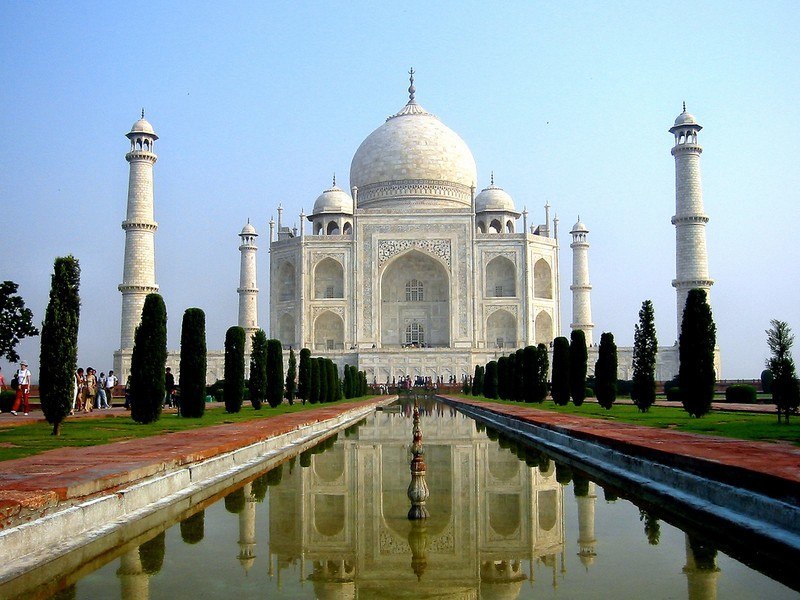
Photo Credit: Flickr
 India | Uttar Pradesh | Agra
 #1 of 26 Places to Visit in Agra
 Distance (From Agra Cantonment): 6 Kms

 Trip Duration (Including Travel): 2-3 Hours

 Transportation Options: Bus / Cab / Auto


 Travel Tips: This is UNESCO World Heritage Site.
About Taj Mahal
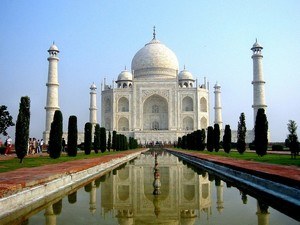
At a distance of 6 Km from Agra Cantonment Railway Station, Taj Mahal is an ivory-white marble mausoleum situated on the right bank of the Yamuna River in Agra, Uttar Pradesh, India. This magnificent mausoleum was commissioned by the Mughal Emperor Shah Jahan in memory of his cherished wife Mumtaz Mahal, and it is regarded as a symbol of everlasting love. The term 'Taj Mahal' translates to the Crown of Palaces in Persian. Recognized as one of the seven wonders of the modern world, it is an essential destination included in Agra tour packages. Constructed entirely from white marble, the Taj Mahal is celebrated as one of the most stunning monuments globally, drawing approximately four million visitors each year.
History of Taj Mahal
The Taj Mahal, among the must include place in Golden Triangle tour packages, was commissioned in 1632 by the Mughal Emperor Shah Jahan in memory of his cherished wife, Mumtaz Mahal, who passed away in 1631 during the birth of their 14th child, Gauhara Begum. The monument's construction was completed in 1648, while the surrounding structures and gardens were finished in 1653 AD. The construction of the Taj Mahal was overseen by architects Abdul-Karim Ma'mur Khan, Makramat Khan, and Ustad Ahmad Lahauri. The land on which the Taj Mahal stands was granted to Shah Jahan by Raja Jai Singh I in exchange for a significant palace located in the heart of Agra. It is estimated that over 20,000 artisans, laborers, painters, and others contributed to the building's construction. In 1983, the Taj Mahal was designated as a World Heritage Site by UNESCO.
Architecture of Taj Mahal
Spanning an area of roughly 42 acres, the Taj Mahal stands as a pinnacle of Muslim artistry in India and is regarded as one of the most esteemed masterpieces of global heritage. It embodies a fusion of Indian, Persian, and Islamic architectural styles. The Taj Mahal complex features a garden that measures 300 square meters, commonly referred to as Charbagh or Mughal Garden. This complex is enclosed on three sides by walls made of red sandstone and can be entered through gates located to the east, west, and south. The principal entrance to the complex is through a magnificent ornamental gateway known as Darwaza-i-Rauza, which is adorned with Quranic verses and the calligraphic phrase 'O Soul, thou art at rest. Return to the Lord at peace with Him, and He at peace with you.'
The complex is an assembly of structures that includes a white marble mausoleum housing the tombs of Shah Jahan and his beloved wife, Mumtaz Mahal. The mausoleum is constructed entirely from white marble and is elevated on a high platform, complemented by 40-meter tall white minarets at each corner. The interior chamber of the Taj Mahal is octagonal in shape and is embellished with intricate lapidary work featuring precious and semi-precious gemstones. The cenotaph of Mumtaz Mahal is situated at the center of the inner chamber, while the cenotaph of Shah Jahan is positioned to the west of Mumtaz Mahal. Both the base and the casket of the cenotaph are adorned with valuable gems.
The four identical faces of the Taj exhibit perfect symmetry, showcasing grand vaulted arches that incorporate pietra dura scrollwork along with quotations from the Quran. The entire structure is crowned with four smaller domes. The most remarkable aspect of this mausoleum is the marble dome, often referred to as an onion dome. Adorned with a lotus motif, the apex of this tomb features a gilded finial, which is surmounted by a crescent moon. This finial reflects a blend of traditional Persian and Hindu decorative styles. The exterior surfaces of the Taj Mahal are embellished with paint, stucco, and intricate stone carvings.
The intricate complex features a red sandstone mosque located to the west, serving as an important gathering spot for the Muslim community in Agra. To the east stands an identical structure known as the Jawab, constructed to preserve symmetry. Inside the Taj, one can find the small Taj Museum, which showcases numerous original Mughal miniature paintings. The museum's main highlight is a pair of 17th-century ivory portraits depicting Emperor Shah Jahan and Mumtaz Mahal. Additionally, it displays some Caledon plates, reputed to fracture or change color if the food placed upon them is poisoned.
Festivals of Taj Mahal
The main festival linked to the Taj Mahal is the annual Taj Mahotsav, a cultural celebration that takes place at Shilpgram, located near the Taj Mahal, every February. Organized by the Taj Mahotsav Committee, the Taj Mahotsav presents a 10-day carnival from the 18th to the 27th of February. Each year, the Taj Mahotsav is commemorated with a specific message or theme intended for the world. This festival, which commenced in 1992, serves as a tribute to Indian art, culture, handicrafts, and cuisine, drawing both domestic and international visitors. Approximately 400 artisans from various regions of India showcase their artistic creations. Numerous film production and media companies in Bollywood, such as Dhaivat Records & Productions, also engage and manage artists during the Taj Mahotsav.
Night View of Taj Mahal
Visiting the Taj Mahal during full moon nights is an experience like no other in the world. The Taj Mahal is accessible for night viewing for five nights each month, specifically on the full moon night and the two nights before and two days after it. The Archaeological Survey of India determines the specific dates and times for these night viewings. On these designated nights, visitors are permitted entry from 8 PM to 12 AM in eight groups of approximately 50 individuals for duration of about 30 minutes each. Consequently, a maximum of 400 individuals can visit on any given night. Tourists are required to arrive at Shilpgram half an hour prior to the scheduled viewing time indicated on their ticket for security checks. It is important to note that everyone must present their identification during the visit. Visitors are not permitted to enter the monument at night and can only admire the Taj Mahal from a distance. Night viewings of the Taj Mahal are suspended every Friday and throughout the month of Ramzan.
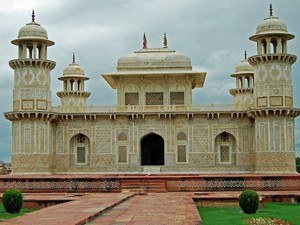
Tomb of Itimad-ud-Daulah in Agra does not strictly enforce a dress code; however, it is advisable to dress modestly. It is best to avoid revealing or inappropriate clothing, and it is recommended to cover shoulders and knees, particularly when visiting the mausoleum itself. Visitors are encouraged to refrain from wearing modern attire such as mini-skirts, shorts, and sleeveless tops while at the tomb.
Dress Code & Other Restrictions of Taj Mahal
Taj Mahal in Agra does not strictly enforce a dress code; however, it is advisable to dress modestly. It is best to avoid revealing or inappropriate clothing, and it is recommended to cover shoulders and knees, particularly when visiting the mausoleum itself. Visitors are encouraged to refrain from wearing modern attire such as mini-skirts, shorts, and sleeveless tops while at the Taj Mahal.
Taj Mahal Timings
Monday: 6 AM - 7 PM, Museum: 10 AM - 5 PM
Tuesday: 6 AM - 7 PM, Museum: 10 AM - 5 PM
Wednesday: 6 AM - 7 PM, Museum: 10 AM - 5 PM
Thursday: 6 AM - 7 PM, Museum: 10 AM - 5 PM
Friday: Closed
Saturday: 6 AM - 7 PM, Museum: 10 AM - 5 PM
Sunday: 6 AM - 7 PM, Museum: 10 AM - 5 PM
Taj Mahal Entry Fee
Entry: Rs.50 for Indians, Rs.1100 for Foreigners, & Rs. 540 for Citizens of SAARC and BIMSTEC Countries
Main Mausoleum Entry: Rs. 200 per Person
Entry: Rs. 510 for Indians, Rs. 750 for Foreigners & Rs. 500 for Children (3-15 years) both Indian & Foreigner
Best Time to Visit Taj Mahal
The best time to visit the Taj Mahal is during the winter months from November to March. This timeframe is considered peak season, yet it also offers enjoyable temperatures and clear skies ideal for sightseeing. However, winter mornings may be foggy, potentially hindering the view of the Taj. To avoid the crowds, it is advisable to schedule your visit early in the morning when the gates open or later in the afternoon just before closing time. The Monsoon season, which lasts from July to September, brings significant rainfall; however, if you are comfortable with this, you will encounter fewer visitors and greater opportunities for unique photographs. The summer months in Agra can be extremely hot, with temperatures exceeding 40°C. Nevertheless, for nighttime views, visiting the Taj Mahal during the summer is preferable, as you are more likely to experience a clear night and a moonlit Taj. Please note that the Taj Mahal is closed to the public every Friday.
How to Reach Taj Mahal
Agra is well connected by air, train and road. The nearest airport to reach Agra is Kheria Airport, located at a distance of 9 Km from the city and is connected to Delhi, Varanasi, Khajuraho, Gorakhpur, Jabalpur, Rajkot and Jamnagar. The city has four major railway stations - Agra Cantonment, Raja Ki Mandi, Agra Fort and Idgah Agra Junction. It has trains from Mumbai, Delhi, Amritsar, Hyderabad, Vizag, Chennai, Indore, Jammu, Jabalpur, Pondicherry, Chandigarh, Kalka, Hubli, Goa, Haridwar, Bhopal, Howrah, Patna, Dehradun, Bangalore, Allahabad, Jaipur, Trivandrum and Lucknow. Agra can also be reached by road from Lucknow, Kanpur, Delhi, Ahmedabad, Gwalior, Noida, Dehradun, Jaipur, Jodhpur, Indore, Haridwar and Vrindavan. Tourists can reach Taj Mahal by using electric buses, cabs, Tongas, tempos, cycle rickshaws and auto rickshaws from all parts of the city of Agra.