


Madan Mohan Temple, Vrindavan - Timings, Festivals, History, Darshan, Pooja Timings


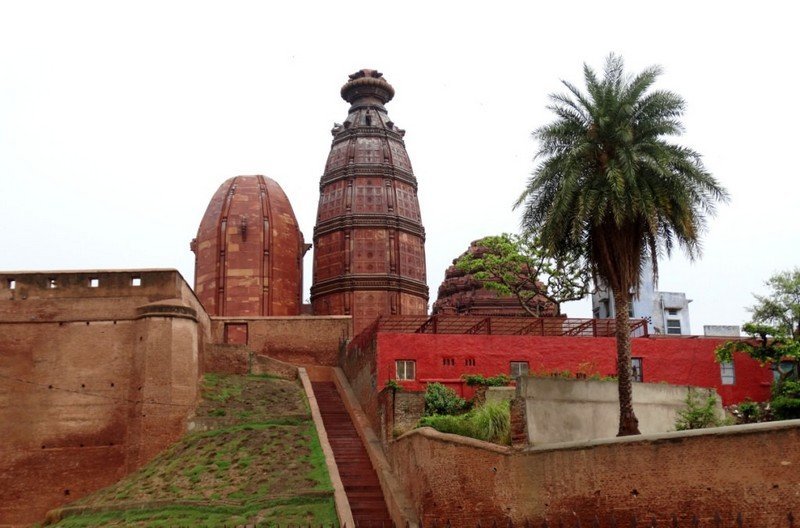
Photo Credit: Flickr

 #6 of 14 Places to Visit in Vrindavan
 Distance (From Vrindavan Railway Station): 1 Kms

 Trip Duration (Including Travel): 1 Hour

 Transportation Options: Cab / Auto


 Travel Tips: None
About Madan Mohan Temple
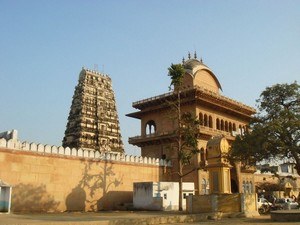
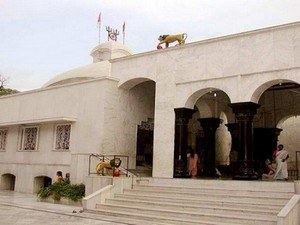
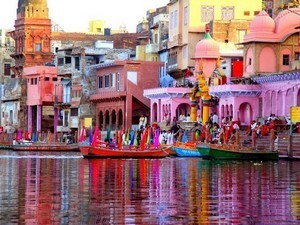
At a distance of 1 Km from Vrindavan Railway Station, Madan Mohan Temple is a Hindu temple situated near the Kali Ghat in Vrindavan. Also known as Sri Radha Madan Mohan Temple, the temple is dedicated to Madan Mohan, a form of the god Krishna & his beloved consort Radha & Lalitha Gopi. It is one of the oldest temples in the region, and among the must-include places in the Vrindavan heritage tour packages.
History & Mythology of Madan Mohan Temple
According to popular folklore, the Sri Radha Madan Mohan Temple in Vrindavan is believed to have been initially constructed by Vajranabh, who was the great-grandson of Krishna. However, over time, the deities were lost. Subsequently, the deity of Madan Mohan was found at the base of an ancient banyan tree by Advaita Acharya during his visit to Vrindavan. He entrusted the worship of Madana Mohan to his disciple, Purusottama Chaube, who later handed the deity over to Sanatana Goswami, who dedicated 43 years to his life in Vrindavan.
According to historical accounts, the temple was reconstructed in 1580 AD under the supervision of Sri Sanatana Goswami by a trader from Multan named Kapur Ram Das. The original image of Lord Madan Gopala was secretly moved to Jaipur by King Jai Singh just before Aurangzeb's assault on the temples of Vrindavan and Mathura. Later, the deities were relocated and installed in the Madan Mohan temple located in Karauli, Rajasthan. It is said that the original deity of Madan Mohan bears a striking resemblance to Krishna from the waist down. In 1748 AD, a replica of Madan Mohan was established in the Madan Mohan temple in Vrindavan. Furthermore, in 1819 AD, Nanda Kumar Basu, a zamindar from Baharu, reconstructed the temple at the base of the hill near the Yamuna River.
Architecture of Madan Mohan Temple
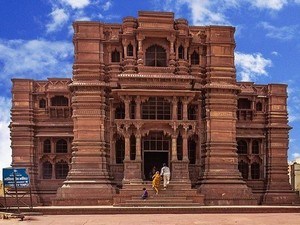
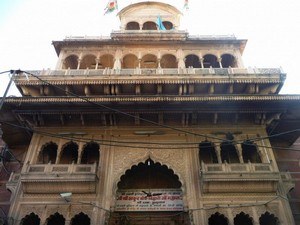
The Madan Mohan Temple is constructed in the Nagara architectural style. Rising to a height of 50 feet near Kaliya Ghat, it features an oval shape made of red sandstone. Founded by Sanatana Goswami, this temple is among the most renowned Goswami shrines in Uttar Pradesh. The main deity of Madan Mohan was initially referred to as Madana Gopala, who is venerated alongside his consort Radha and Lalita gopi on either side within the temple's sanctum sanctorum. The elaborate carvings adorning every inch of the temple captivate all visitors.
Festivals of Madan Mohan Temple
The Madan Mohan Temple serves as a significant hub for the observance of various Hindu festivals, especially those associated with Lord Krishna and Radha, such as Janmashtami, which commemorates the birth of Lord Krishna, and Radhashtami, celebrating the birth of Radha. These festivals feature special prayers, ceremonies, and events that draw a considerable number of devotees. Holi, known as the festival of colors, is celebrated with lively colors and cultural performances. Additionally, the temple observes other Hindu festivals, including Gopashtami and Sharad Purnima, with great enthusiasm.
Dress Code & Other Restrictions of Madan Mohan Temple
Madan Mohan Temple in Vrindavan has a dress code that mandates visitors to don modest and traditional clothing. Men are expected to wear long pants, or dhotis along with shirts or kurtas, whereas women should opt for sarees, salwar kameez, or other forms of Indian attire that adequately cover the shoulders and knees. It is advisable to refrain from wearing Western garments such as shorts, skirts, and sleeveless tops.
Generally, non-Hindus are allowed to visit Madan Mohan Temple. However, there may be restrictions on accessing certain areas or participating in specific rituals.
Madan Mohan Temple Timings
Monday: 7 AM - 12 PM & 4 PM - 8 PM in winter & 7 AM - 11 PM & 5 PM - 9:30 PM in summer
Tuesday: 7 AM - 12 PM & 4 PM - 8 PM in winter & 7 AM - 11 PM & 5 PM - 9:30 PM in summer
Wednesday: 7 AM - 12 PM & 4 PM - 8 PM in winter & 7 AM - 11 PM & 5 PM - 9:30 PM in summer
Thursday: 7 AM - 12 PM & 4 PM - 8 PM in winter & 7 AM - 11 PM & 5 PM - 9:30 PM in summer
Friday: 7 AM - 12 PM & 4 PM - 8 PM in winter & 7 AM - 11 PM & 5 PM - 9:30 PM in summer
Saturday: 7 AM - 12 PM & 4 PM - 8 PM in winter & 7 AM - 11 PM & 5 PM - 9:30 PM in summer
Sunday: 7 AM - 12 PM & 4 PM - 8 PM in winter & 7 AM - 11 PM & 5 PM - 9:30 PM in summer
Madan Mohan Temple Entry Fee
Entry is Free
Best Time to Visit Madan Mohan Temple
The best time to visit Madan Mohan Temple in Vrindavan is from October to March. During this period, the climate is pleasant, making it comfortable for visitors to explore the temple and participate in the festivities. For individuals wishing to experience the temple at its most spiritually enriching, it is recommended to schedule your visit during the Janmashtami festival, which commemorates the birth of Lord Krishna and generally takes place in August/September. Another favorable occasion to visit the temple is Holi, the festival of colors, which typically happens in March. Nevertheless, it is important to note that the town experiences a surge of tourists during these festivals, so one should be ready for the bustling crowds. Vrindavan endures extremely hot summers and heavy monsoons, rendering those months less suitable for travel and exploration.
How to Reach Madan Mohan Temple
Agra Airport is the closest airport, which is 70 Km away from Vrindavan. Vrindavan has a Railway Station but Mathura is the major railhead, which is about 13 Km away. Mathura Junction Railway Station is a major rail head with regular train services to Delhi, Mumbai, Ahmedabad, Hyderabad, Pondicherry, Vizag, Dehradun, Chandigarh, Trivandrum, Shirdi, Jammu Tawi, Chennai, Hubli, Goa, Patna, Lucknow, Bangalore and Chhattisgarh. Vrindavan is also well connected by road with Mathura, Agra, Jaipur, Lucknow, Delhi, Indore and Allahabad. One can reach Madan Mohan Temple by hiring a cab, or an auto-rickshaw from all parts of Vrindavan.