1
DAY 1 : VARANASI SIGHTSEEING
DAY 1 : VARANASI SIGHTSEEING
 Sightseeing
Leisure / No Sightseeing
About Kashi Vishwanath Temple / Golden Temple
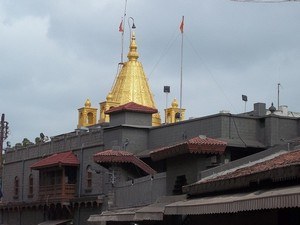
At a distance of 5 Km from Varanasi Junction, Kashi Vishwanath Temple is an ancient Hindu temple situated on the banks of River Ganga in Varanasi city of Uttar Pradesh. Kashi Vishwanath Temple is dedicated to Lord Vishwanath, one of the incarnations of Lord Shiva and he is regarded as the patron deity of Varanasi. Popularly known as Golden Temple, it is one of the twelve jyotirlinga temples of Lord Shiva, and also one of the popular
pilgrimage sites in India. The temple was visited by many great saints including Ramakrishna Paramhansa, Swami Vivekananda, Maharishi Dayanand Saraswati, Goswami Tulsidas, Adi Shankaracharya and Gurunanak Dev. Lord Vishwanath is considered to the supreme origin of the spiritual truth and strengthens the bonds of universal brotherhood. It is believed that a single darshan of Vishweshwara Jyotirlinga is considered to auspicious more than the darshan of other .....
 Duration of visit: 1 Hour
Timings: 4 AM to 11 PM
About Annapurna Devi Mandir
At a distance of 5 Km from Varanasi Junction, Annapurna Devi Mandir is a popular Hindu temple situated near Kashi Vishwanath Temple in Vishwanath Galli area of Varanasi, Uttar Pradesh. The temple is dedicated to Goddess Annapurna Devi, the Goddess of Food or the Goddess of Nourishment. It is believed that Goddess Parvati gave Alms to Shiva, and she is depicted with a bowl in one hand and ladle in the other, serving food to Shiva, standing in front of her with his begging bowl in the hand. Mata Annapurna is the Goddess of Varanasi who always protects Kashi and feeding her devotees. Having great religious importance in Hinduism, it is one of the must-include places in the
Varanasi pilgrimage packages.
History & Mythology of Annapurna Devi Mandir
Annapurna Devi Mandir was constructed by Maratha Peshwa Baji Rao in 1729 AD. According to the legend, the entire world .....
Duration of visit: 30 Mins
Timings: 4 AM to 10 PM
About Manikarnika Ghat
At a distance of 1 Km from Dasashwamedh Ghat and 6 Km from Varanasi Junction, Manikarnika Ghat is one of the holiest ghats along the banks of River Ganga in the sacred city of Varanasi. Situated just beside Dasashwamedh Ghat, it is the main cremation ghat in Varanasi, and among the most famous places to visit as part of the
Varanasi leisure tours. The Manikarnika Ghat is perpetually bustling with ceremonies and rituals, with pyres burning round the clock, and it is a poignant place where life and death intersect visibly. According to the religious beliefs, burning the dead bodies at this ghat is a way to attain Moksha, the salvation.
History of Manikarnika Ghat
The Manikarnika Ghat is vividly depicted in the Kashi Khanda and is commonly referred to as Mahashmashana, the grand cremation ground. Additionally, this ghat is mentioned in a Gupta inscription dating back to the .....
Duration of visit: 30 Mins
Timings: 24 Hours
At a distance of 1 km from Dasashwamedh Ghat and 5 km from Varanasi Junction, Lalita Ghat is one of the main ghats on the Ganges River in Varanasi. This ghat is one of the most venerated ghats of Kashi for the devotees and is also identified among the seven most prominent ghats of Varanasi by Varanasi Tourism Department.
The ghat was built by King of Nepal, Rana Bahadur Shah in the early 19th century CE. The ghat is dedicated to Lalita Devi who is reckoned to be the personification of Goddess Durga. Devotees who come to this ghat believe that bathing at this ghat will earn the blessings of the Goddess.
Lalita Ghat is dotted with several Hindu temples. The well-known 'lingam' of Ganga Keshav and shrines of Gangatitya, Kashi Devi, Lalita Devi and Bhagirath Tirtha are affiliated to Lalita Ghat. Also known as Nepali Mandir, the Keshava temple was built by King of Nepal in typical Nepalese architecture. Also known as Kothwala Temple, thi is the replica of the famous Pashupatinath .....
Duration of visit: 30 Mins
Timings: Nepali Temple: 4 AM - 9 PM
About Sri Kasi Vishalakshi Devi Temple
At a distance of 5 Km from Varanasi Junction, Sri Kashi Vishalakshi Temple is a Hindu temple situated at Mir Ghat on the banks of the Ganges at Varanasi in Uttar Pradesh, India. The temple is dedicated to Goddess Vishalakshi Devi, the divine form of Goddess Sati. This temple is one among the 51 Shakti Peethas, and is part of the famous triad of temples- Kanchi Kamakshi, Madurai Meenakshi and Kashi Vishalakshi. Situated near Kashi Vishwanath Mandir, it is among the popular temples in Uttar Pradesh, and also one of the must visit places as part of the
Varanasi family packages.
History & Mythology of Sri Kasi Vishalakshi Devi Temple
The Sri Kashi Vishalakshi Devi Temple was established and is preserved by the Nattukottai Nagarathar, a trading community originating from Tamil Nadu. The temple's narrative is closely linked to the tale of Sati, the daughter of .....
Duration of visit: 30 Mins - 1 Hr
Timings: 4.30 AM - 11 AM & 5 PM - 10 PM
About Dasashwamedh Ghat
At a distance of 6 Km from Varanasi Junction, Dasashwamedh Ghat is a sacred ghat on the banks of River Ganga in the holy town of Varanasi. Located close to Vishwanath Temple, Dasashwamedh Ghat is the main ghat in Varanasi, and also one of the popular places to visit as part of the
Varanasi luxury tours. This is also the busiest ghat. On the tenth waxing fortnight of the Jyeshtha (May/June) worship of the Ganga is celebrated on a grand scale in the Ganga temple at the top of the ghat. Dashashwamedh Ghat is a popular destination for pilgrims and tourists who come to witness the sacred rituals, take part in boat rides, and soak in the spiritual ambiance of Varanasi.
History & Mythology of Dasashwamedh Ghat
Dashashwamedh Ghat is translated as the 'Ghat of Ten Horses.' This name originates from an ancient legend in which Lord Brahma conducted a ten-horse sacrifice, known as .....
Duration of visit: 30 Mins - 1 Hr
Timings: 24 Hours, Ganga Aarti: 6.30 PM
2
DAY 2 : PRAYAGRAJ SIGHTSEEING
%%Itinerary_Title_Day2%%
Sightseeing
About Triveni Sangam
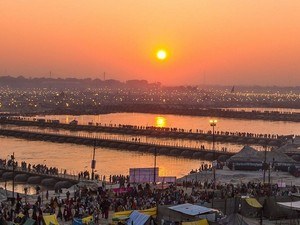
At a distance of 8 Km from Allahabad Railway Station, Triveni Sangam is a sacred place located in Prayagraj, Uttar Pradesh. Sangam means Confluence in english, while Triveni means three rivers. The term Sangam translates to Confluence in English, while Triveni refers to three rivers. Triveni Sangam serves as the confluence of three rivers - the Ganga, Yamuna, and Saraswati (the latter being a mythical river believed to have vanished over 4,000 years ago). This site is one of the prominent pilgrimage destinations in Uttar Pradesh, particularly as it hosts the Kumbh Mela, which occurs every 12 years. Additionally, it is considered one of the essential locations to include in the
Prayagraj pilgrimage tour packages.
History of Triveni Sangam
Triveni Sangam is referenced in ancient scriptures such as the Vedas, Puranas, and the Hindu epic Mahabharata. Historical accounts .....
Duration of visit: 1 Hour
Timings: 24 Hours
About Bade Hanuman Temple
At a distance of 1 Km from Triveni Sangam, and 7 Km from Allahabad Railway Station, Bade Hanuman Temple is a well-known Hindu temple located in Prayagraj, Uttar Pradesh. Popularly known as Lette Hanuman Mandir, Bade Hanuman Temple is dedicated to Hanuman, the monkey god. This temple is an underground pit that houses a huge lying idol of Hanumanji, which is six to seven feet below the ground. This is the only Lord Hanuman temple in the world where the idol is in a reclining position. Situated near Allahabad Fort, it is one of the popular religious
places to visit in Prayagraj.
History & Mythology of Bade Hanuman Temple
The origins of the temple can be traced back roughly 700 years. As per legend, the king of Kannauj was childless. In his quest for offspring, he visited the Guru Ashram, where the Guru instructed Rajan to install a statue of Hanuman in .....
Duration of visit:
Timings:
About Mankameshwar Temple
At a distance of 6 Km from Allahabad Railway Station, Mankameshwar Temple is a revered Hindu temple located on the banks of Yamuna River in the Cantonment area of Allahabad. Also known as Pishach Mochan Tirtha, Mankameshwar Temple is dedicated to Lord Shiva and is maintained by Sri Shankaracharya Trust. Situated near the Saraswati Ghat, it is one of the most popular temples in Allahabad, and among the most visited places as part of the
Prayagraj family packages.
History & Mythology of Mankameshwar Temple
Mankameshwar signifies the deity who grants wishes, and the temple's name is derived from a fascinating legend. According to the legend, it was founded by Lord Rama during the time he, along with Laxman and Sita, rested under the Akshayavat tree while en route to Chitrakoot. At one point, goddess Sita expressed her desire to offer prayers to Lord Shiva after her ritual .....
Duration of visit:
Timings:
At a distance of 6 km from Allahabad Railway Station, Alopi Devi Mandir is an ancient temple located in Alopi Bagh locality of Allahabad, Uttar Pradesh. Situated near Triveni Sangam, it is one of the revered Shaktipeethas in India, and among the must-visit temples in Allahabad.
Dedicated Goddess Sati, Alopi Devi Mandir is a special temple where no idol of the mother or a mark of any organ has been kept instead a cradle is worshipped. According to legend, the paw of the right hand of Goddess Sati fell here and became invisible or missing, that is why this Siddhapeeth has been named Alop (disappeared) Shankari and a cradle has been placed here as a symbol. As per alternate legend, Alopi Mata is the newlywed bride who disappeared from the wooden carriage when the marriage procession was attacked by a group of robbers. The strange disappearance of the bride was deemed as a miracle and a temple was erected at the same site to worship the divine bride. There lies a wooden cot in the sanctum .....
Duration of visit:
Timings:
At a distance of 5 km from Allahabad Railway Station, Anand Bhavan was the ancestral home of Jawaharlal Nehru located in Allahabad, Uttar Pradesh. Situated in the Allenganj, it is one of the must-visit places during your Allahabad tour.
Anand Bhavan was constructed by Indian political leader Motilal Nehru in the 1930s to serve as the new residence of the Nehru family when the original mansion Swaraj Bhavan was transformed into the local headquarters of the Indian National Congress. This double-storeyed mansion was personally designed by Motilal Nehru. The house was beautifully adorned with wooden furniture imported from China and Europe and was decorated with various artifacts from all around the world. It was visited by many famous freedom fighters to develop the conspiracies to drive Britishers out of the country. Several momentous decisions and events related to the freedom struggle also took place inside this Bhavan.
The .....
Duration of visit:
Timings:


 Trip Starts From: Varanasi
 Trip Ends At: Varanasi
 Total Places Visited: 11
 Trip Starting Point: Varanasi City
 Mode of Travel: Car (or Cab)
 Ideal Start Time: 9 AM (Day 1) & 8 AM (Day 2)
 Total Places Visited: 11
 Overnight Stay in Varanasi
 +91-779959123010 AM - 7 PM (Mon - Sat)