


Iraniyur Aatkondanthar Temple, Chettinadu - Timings, Festivals, History, Darshan, Pooja Timings


 India | TamilNadu | Chettinadu
 #9 of 15 Places to Visit in Chettinadu
 Distance (From Chettinadu): 28 Kms

 Trip Duration (Including Travel): 2 Hours

 Transportation Options: Cab


 Travel Tips: None
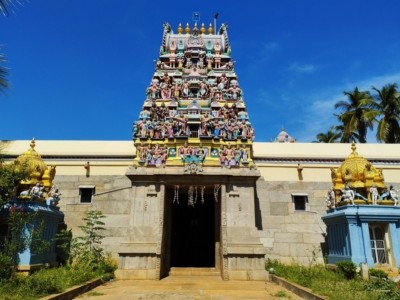
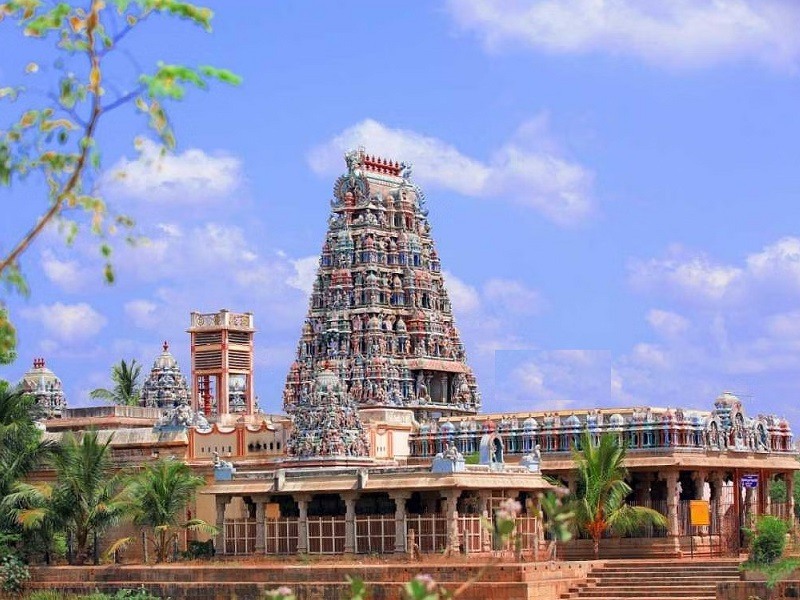
At a distance of 28 Km from Chettinadu Railway Station, 37 Km from Pudukkottai, and 41 Km from Karaikudi, the Sri Aatkondanathar Temple is an ancient shrine located in Iraniyur in the Sivaganga district of Tamil Nadu, India. It is one of the top places to visit as part of Chettinad pilgrimage packages.
The Sri Aatkondanathar Temple is dedicated to Lord Shiva, who is revered here as Atkondanathar, alongside his consort, Mother Sivapuranthevi. This temple is one of the nine temples collectively referred to as the Nagarathar temples located in the Chettinad region. Historical records indicate that this site was granted to the Nagarathar community in the year 714 CE. It is believed that the core temple existed long before this date. The Pandya king Sundara Pandyan, who permitted the Nagarathar community to acquire various lands and manage temples (including the nine Nagarathar temples), is known to have worshipped at this temple. However, the temple underwent a complete refurbishment approximately 500 years ago.
Also known as the Iranikkovil, the temple possesses a fascinating history regarding its construction. A prevalent belief is that Lord Vishnu, in his Narasimha avatar, incurred dosham after vanquishing the asura Hiranyakasipu. Consequently, Lord Vishnu worshipped Shiva at this location to absolve himself of the sin associated with killing Hiranyakasipu. Lord Shiva granted darshan to Narasimhar and purified him of the dosha at this site. Thus, the area became known as Hiranyanoor, which later evolved into Iraniyur. At the request of Vishnu, Lord Shiva remained here under the name of Aatkonda Nathar. He is also venerated as Narasimheswarar for the relief He provided to Lord Narasimha.
The wrath of Narasimhar during his confrontation with the demon also led to his sister Parvati becoming enraged. Consequently, the goddess divided herself into nine distinct Kali devis. These nine Kalis subsequently encircled Siva and offered prayers to Him, allowing Parvati to regain her original form. For this reason, she is referred to as Sivapurandevi here, a rather uncommon title for the Goddess.
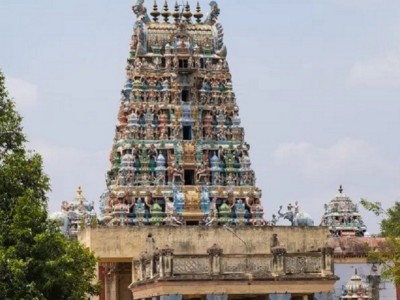
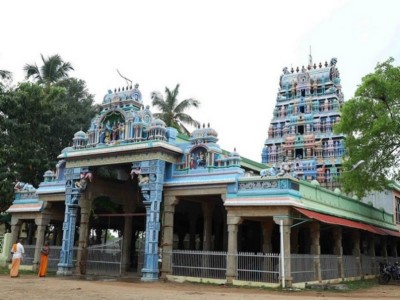
The temple complex comprises the Sanctum sanctorum, antarala, ardha mandapam, Maha mandapam, and a Mukha mandapam. Above the sanctum sanctorum is a three-tiered stucco vimana. Lord Aatkondanathar is a swayambumurthy. Ambal resides in a separate shrine facing south, depicted with two hands in abhaya varada hastam. The pillars opposite Ambal's sannidhi feature images of nine Durgas, while those opposite Shiva's sannidhi display images of twelve, including Veerabhadra, Markandeswara, Rudra Murthy, and others. The sculptures are crafted as if molded from cement. Bhairavar is also located in a separate sannidhi adjacent to Ambal Sannidhi. In the praharam, one can find Natarajar, Suryan, Chandran, Navagrahas, Somaskandar, Vinayagar, Sri Valli Devasena Subramaniar, Gajalakshmi, and Chandikeswarar.
The temple maintains the tradition of Kumbhabhishekam, with the most recent ceremony held in 1990. This ritual signifies the renewal of spiritual energy, ensuring that Iraniyur continues to be a sacred sanctuary for future generations. The temple also celebrates other festivals such as Karthikai Champaka Sashti and Tirukarthikai in November-December, Margazhi Tiruvadhirai in December-January and Maha Shivrathri in February-March.
Timings: 6 AM - 12 PM & 5 PM - 7:30 PM
Entry: Free