


Soorakudi Desikanathar Temple, Chettinadu - Timings, Festivals, History, Darshan, Pooja Timings


 India | TamilNadu | Chettinadu
 #7 of 15 Places to Visit in Chettinadu
 Distance (From Chettinadu): 3 Kms

 Trip Duration (Including Travel): 1 Hour

 Transportation Options: Auto


 Travel Tips: None
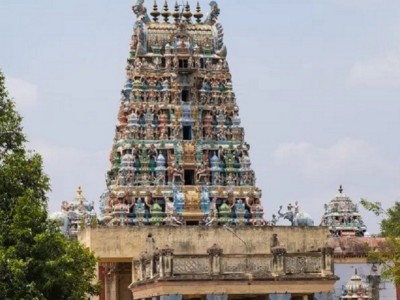
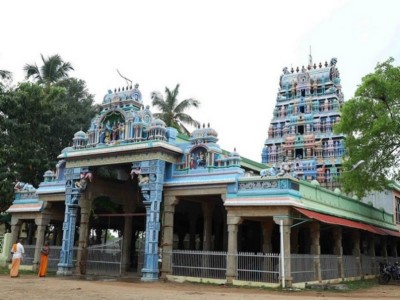
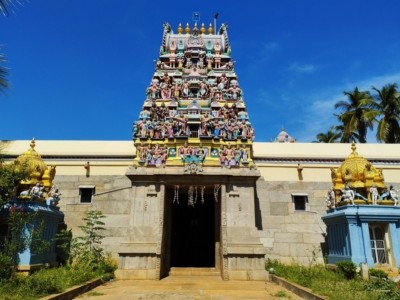
At a distance of 3 Km from Chettinadu Railway Station, and 13 Km from Karaikudi, the Desikanathar Temple is an ancient shrine located in Soorakudi village in the Sivaganga district of Tamil Nadu, India. It is one of the top religious places to visit in Chettinad.
The Desikanathar Temple located in Surakudi is dedicated to Lord Shiva, who is revered here as Desikanathar alongside his consort Avudainayaki. This temple is one of the nine temples collectively referred to as the Nagarathar temples in the Chettinad region. When the Nagarathars migrated from various regions to the Chettinadu area, the ruling Pandya king Soundara Pandyan allocated nine villages to the immigrants over time. These villages eventually became the central sites of the nine Nagarathar temples that exist today.
Initially, the area was named after the temple's main deity, Desikanathapuram, but it later evolved into the name Soorakudi. There are two primary reasons for this name change. Firstly, the region was named due to the abundant growth of Soorai scrub forests, which were known for their medicinal properties. Secondly, the name Suryakudi is linked to the sthala puranam of the temple, which narrates that after being defeated by Veerabhadrar at Daksha's yagam, the Sun God visited various temples to seek forgiveness from Lord Shiva. Upon arriving at this location, he worshipped Lord Shiva, who took pity on him and granted him darshan. The first puja performed in the temple is dedicated to the Sun God, which led to the naming of the place as Suryakudi, a name that eventually transformed into Soorakudi.
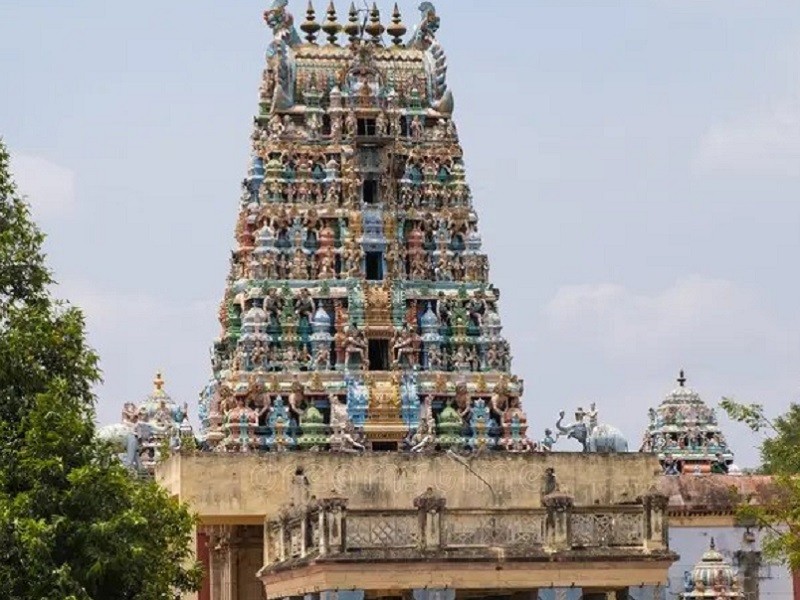
The original temple is believed to have existed since the 7th or 8th century CE, although the current structure reflects a more recent architectural style, heavily influenced by the Nagarathar community, as observed in other temples throughout the Chettinadu region. The temple faces east and features a tank directly to the east, along with a mandapam situated between the Teertham and the raja gopuram. The maha mandapam is elevated and contains the dhwajasthambam, bali peetham, and Nandi. In a manner similar to some other temples in this area, Nandi's pedestal is uniquely supported by four yalis, which is quite intriguing and uncommon.
The most captivating feature of the temple is the iconography of Amman. Avudai Nayaki Amman is represented in the form of Siva-roopam, characterized by three eyes and eight arms. Another notable aspect is the portrayal of Bhairavar wielding a club instead of the traditional trident. Since Bhairavar is one of the principal deities of this temple, the deepam (karpoora harathi) offered to the moolavar and Amman is not presented to the devotees; rather, devotees are permitted to touch the harathi performed for Bhairavar. Within the prakaram, one can find the 63 nayanmars, followed by Vinayakar, Siva depicted as Chandrasekharar alongside Amman, Murugan with his consorts Valli and Deivanai, Gajalakshmi, Saraswati, Natarajar sabhai, Bhairavar, Suryan, and Chandran. Additionally, there exists a distinct Navagraham shrine.
The festivals celebrated at the temple with great enthusiasm include Lord Bhairavar Janmashtami during the new moon fortnight of Margazhi (December-January), Aani Uthira Vizha in June-July, and Margazhi Tiruvadhirai in December-January.
Timings: 6 AM - 12 PM & 4 PM - 7:30 PM
Entry: Free