


Pillaiyarpatti Karpaka Vinayakar Temple, Chettinadu - Timings, Festivals, History, Darshan, Pooja Timings


 India | TamilNadu | Chettinadu
 #6 of 15 Places to Visit in Chettinadu
 Distance (From Chettinadu): 17 Kms

 Trip Duration (Including Travel): 1-2 Hours

 Transportation Options: Cab


 Travel Tips: None
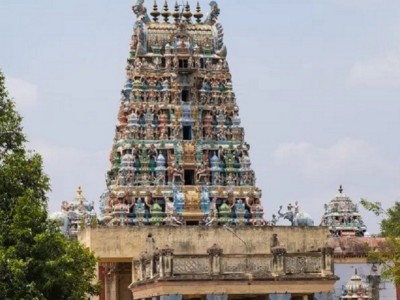
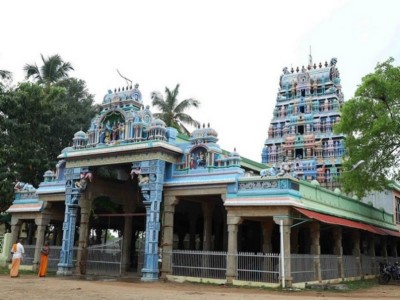
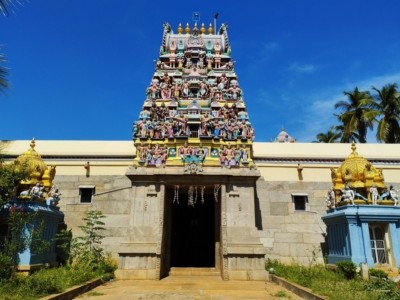
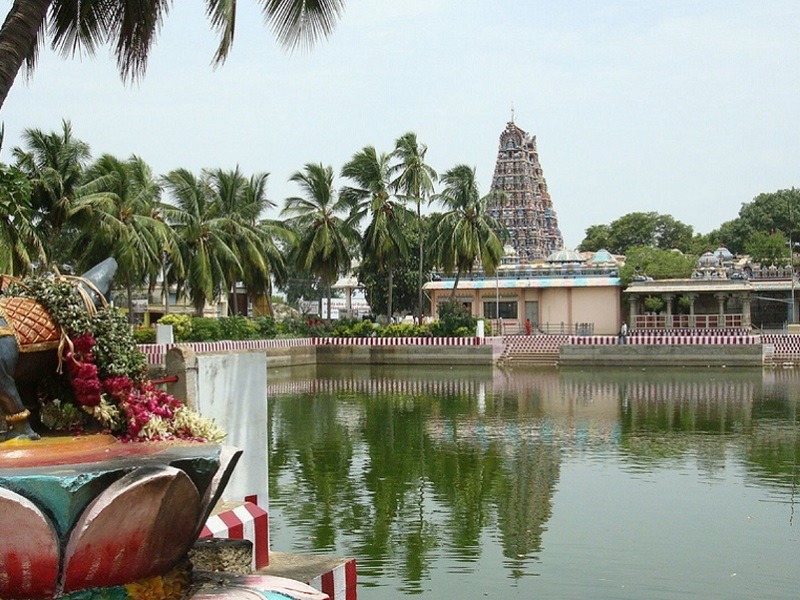
At a distance of 17 Km from Chettinadu Railway Station, 16 Km from Karaikudi, and 42 Km from Pudukkottai, the Karpaka Vinayakar Temple or Pillaiyarpatti Pillaiyar Temple is an ancient rock-cut shrine located in Pillayarpatti village in the Sivaganga district of Tamil Nadu, India. It is one of the must-include places in the Chettinad heritage packages.
The Pillaiyarpatti Karpaga Vinayakar Temple is devoted to Lord Ganesha, the Hindu god of knowledge and wisdom. In Tamil, the term Pillaiyar denotes Lord Vinayaka.
The magnificent temple is the only one in the entire state of Tamil Nadu that features a 6-foot rock-cut idol of Pillaiyar. It is regarded as one of the nine temples significant to the Nagarathar community, and also among the four principal Arjuna-Kshetras (abodes of Arjuna) in South India, alongside Thirupudai Maruthur, Thiruvudai Maruthur in Tamil Nadu, and Srisailam in Andhra Pradesh.
The Pillaiyarpatti Pillaiyar Temple is an ancient rock-cut cave temple, with its roots tracing back to the 7th century CE, around 650 CE. More than 15 inscriptions are found within the temple, which assist in establishing its age. According to these inscriptions, it has been determined that the complex has experienced a three-stage reformation. The first stage involved the creation of the exquisitely sculpted shrines of Karpaka Vinayagar and Tiruveesar (Lord Shiva). The pillars within the temple are of pre-Pallava origin (before the 3rd century AD). Several inscriptions within the temple, dating from 1091 AD to 1238 AD, indicate that the Pandya kings, including Maravarman Sundara Pandyan I, made substantial contributions to the temple. Following the 13th century AD, the Pillaiyarpatti Nagarathars assumed the role of custodians of the temple. It was during this second phase that intricate rajagopurams and vimanas were constructed. The third stage has been characterized by more recent developments, including repairs, refurbishments, rebuilding, and renovations of the temple tank.
This 7th-century rock-cut temple stands as a magnificent testament to early Pandyan architecture. The temple structure is renowned for its exquisite sculpture work, elegant temple complex, and a beautifully adorned shrine. With intricate carvings embellishing the exterior of the building, the Pillaiyarpatti Temple offers a captivating sight. The main sanctum is dedicated to Lord Ganesha, known as the Vinayagar sannidhi. On the southern face of the rock, there is a 6-foot rock-cut bas-relief of Karpaga Vinayagar faces the north direction. The main shrine was sculpted by a renowned artist called Ekkattur Koon Peruparanan.
The iconography of Ganesha is distinctive in various aspects, featuring only two hands, with one hand holding sweets, and a trunk that curves to the right. This contrasts with later representations that typically depict him with four hands, a trunk turned to the left, and sweets held in one of his left hands. In the Karpaka Vinayakar relief of Ganesha, his left tusk is broken, indicating that certain iconographic characteristics of Ganesha were already well established by the time this image was sculpted. Locals refer to this relief as Valampuri Vinayagar. The deity is believed to fulfill the wishes of his devotees, akin to the Karpagam tree, a divine wish-fulfilling tree in Hindu mythology, which is the origin of the name Karpaga Vinayakar.
On the west face of the cave wall, there is a sanctum that houses a 7th-century Shiva linga at its center. A significant inscription within this sanctum reads 'Ikkatturu Kotturu Ainiijan,' likely identifying the patron responsible for its excavation. It is thought that the inscription within the rock-cut cave was created sometime between the 3rd and 7th centuries CE. Subsequent expansions introduced several mandapams and additional shrines dedicated to Nataraja, Chandesar, Sivakami Amman, Saptamatrikas, Bhairava, Somaskanda, Kartikeya with his two wives, Pasupatheeswarar, and the Navagrahas.
The temple serves as a prominent center for the annual Vinayaka Chaturthi festival, which is celebrated over a span of 10 days. On the 9th day, a chariot festival takes place, during which Hindus from the region gather to partake in a procession through the streets. The processional Ganesha idol is adorned with gold plating and is transported in a mouse vahana, accompanied by his parents, Nataraja and Sivakami Amman. Additionally, the temple observes monthly Chaturthi days with great grandeur.
Timings: 6 AM - 12 PM & 4 PM - 8:30 PM
Entry: Free