


Thirumayam Fort, Chettinadu - Timings, History, Architecture, Best Time to Visit


 India | TamilNadu | Chettinadu
 #4 of 15 Places to Visit in Chettinadu
 Distance (From Chettinadu): 12 Kms

 Trip Duration (Including Travel): 1-2 Hours

 Transportation Options: Cab / Auto


 Travel Tips: None
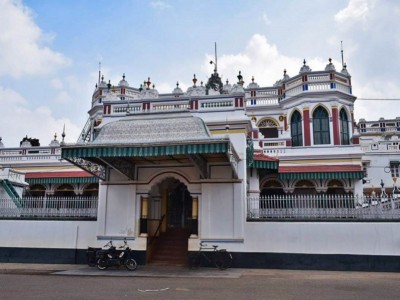
At a distance of 12 Km from Chettinadu Railway Station, 17 Km from Pudukkottai, and 24 Km from Karaikudi, the Thirumayam Fort is a historical fort situated in the town of Thirumayam in the Pudukkottai District of Tamil Nadu, India. It is one of the top heritage sites near Madurai.
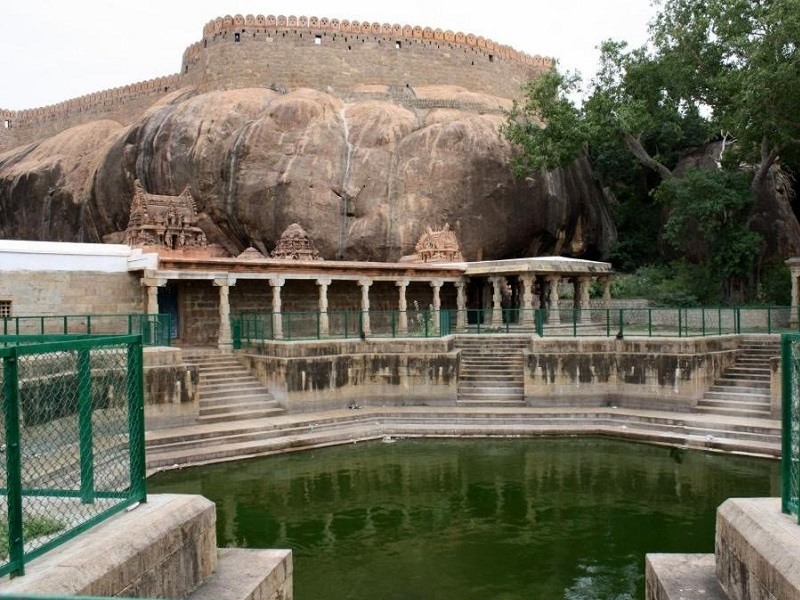
Situated along the Pudukkottai-Karaikudi Highway, the Thirumayam Fort holds immense historical importance and attracts a significant number of tourists year-round as part of the Chettinad packages from Madurai. Commonly referred to as Oomayan Kottai, this fort represents a history that spans at least 300 years. Elevated on a rocky hill, the Tirumayam Fort is renowned for its aesthetic appeal and architectural excellence. The fort is preserved and managed by the Archaeological Survey of India as a ticketed site.
The Thirumayam Fort was constructed by Sethupathy Vijaya Ragunatha Thevar of Ramanathapuram in 1687. The fort served a dual role of safeguarding the populace and providing accommodation for the royal family. Subsequently, the fort was transferred to his brother-in-law, Raghunatha Raya Tondaiman. During the Polygar wars (1799-1801), Thirumayam Fort became a significant political stronghold. The presence of cannons from the British era indicates its tumultuous past, characterized by the Polygar wars fought between local leaders and the British East India Company in the late 18th century. The fort underwent extensive renovations by the Archaeological Survey of India in 2012.
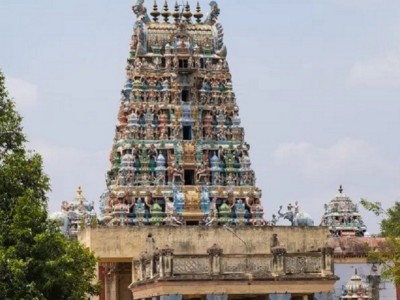
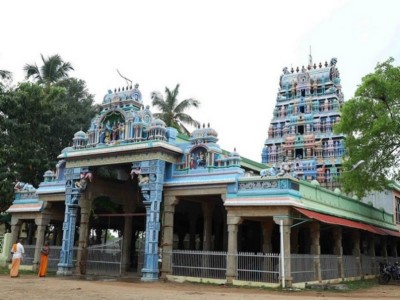
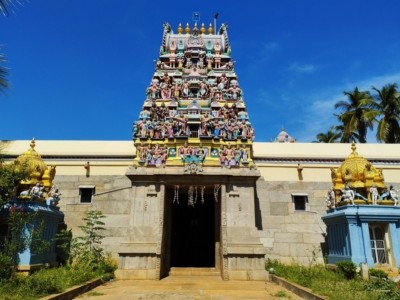
The Thirumayam Fort exemplifies Nayaka architecture and is constructed from red sandstone. It features 17th-century ramparts that once enclosed a 40-acre town. The fort comprises temples, caves, a jail, and a pond, offering a comprehensive insight into the lifestyle of the ruling dynasty. The Fort has three entrances facing north, south, and east, each dedicated to the shrines of deities of both religious and historical significance, including Hanuman, Sakthi, Ganapathi, and Karuppar.
Within the fort, one can find various structures such as a palace, a granary, a prison, and a watchtower. The palace comprises numerous rooms and halls, some of which still showcase intricate carvings and paintings. The granary is an enormous edifice capable of storing thousands of tons of grain. The prison is a compact cell-like structure characterized by thick walls and a solitary entrance. The watchtower, positioned at the fort's highest point, provides breathtaking views of the surrounding landscape. Encircling the lower wall of the fort is a moat, and atop a rock stands a bastion featuring a cannon of British origin. Additionally, a natural pond located to the south of this platform embodies tranquility and harmony.
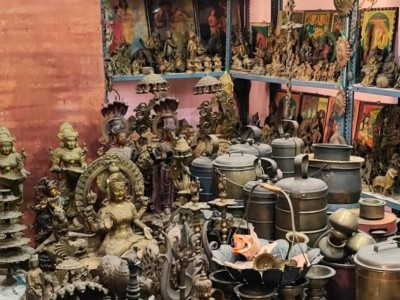
Furthermore, two rock-cut temples situated at the southern base, which date back to the eighth century, pay tribute to the Vaishnavite deity Sri Sathyamurthy and the Shaivite deity Sri Sathyagireeswarar. The site is enriched by stone inscriptions, a boulder cave containing a rock-cut linga, and the remnants of an abandoned jail, all contributing to its archaeological significance. The town is also renowned for its handicrafts and textiles, which serve as excellent souvenirs.
Timings: 9 AM - 5:30 PM
Entry: RS. 25 for Indians & Rs. 250 for Foreigners