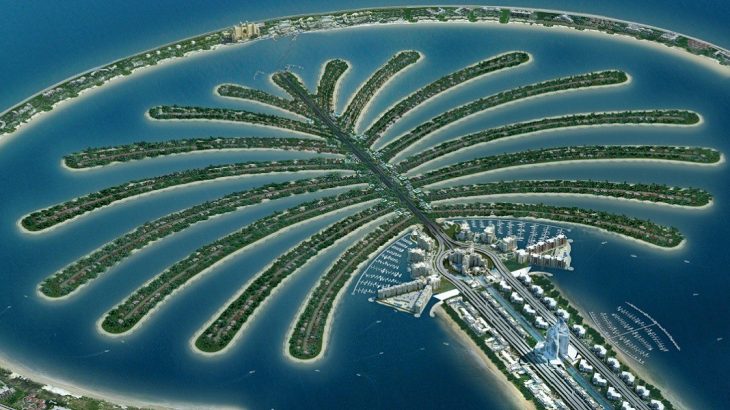
Regarded as the eighth wonder of the modern world, the Palm Jumeirah is an artificial archipelago situated in the Jumeirah coastal region of Dubai, United Arab Emirates. Extending 5 km into the Arabian Gulf and designed in the shape of a date palm, Palm Jumeirah was developed through land reclamation by Nakheel Group and is part of a broader series of projects known as the Palm Islands. This man-made island has increased Dubai’s coastline by over 320 miles, alongside Palm Jebel Ali and Palm Deira. Palm Jumeirah stands as one of the most renowned artificial islands globally and is also recognized as one of the most ambitious engineering feats ever accomplished. As the first of the Palm Islands, Palm Jumeirah represents one of the city’s most daring initiatives and ranks among the top attractions in Dubai. This massive artificial island features a trunk and 17 fronds, making it visible from space. It boasts serene beaches, opulent villas, sophisticated apartments, and a collection of luxury hotels, including the world-famous Atlantis the Palm, Dubai. Below are several astonishing facts about this architectural marvel that are sure to leave you in awe during your visit as part of Dubai Tour Packages.
Watch Video - Tourist Places in Dubai
1. Made from Millions of tons of Rock and Sand
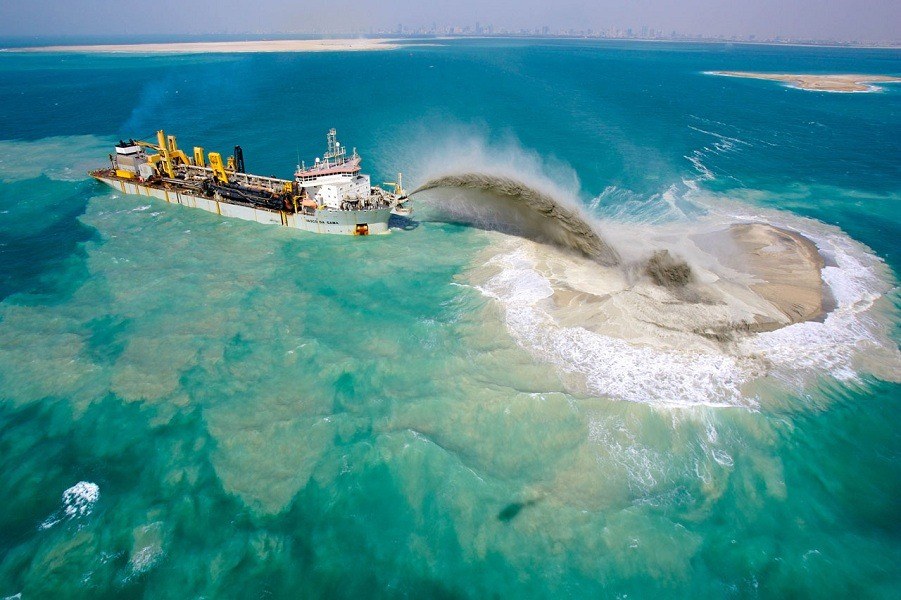
Launched in 2001, Palm Jumeirah, an artificial island of Dubai, was the flagship project of the Dubai-based Nakheel group, a government based developer in the city. In order to build the island, millions of cubic meters of sand dredged out from the bottom of the Persian Gulf by the Belgian company, Jan De Nul and Dutch company, Van Oord and sprayed on the sea. They used 94 cubic meters of sand to build Palm Jumeirah, which is the 2.5 times to fill New York’s Empire State Building. In order to ensure that the sand will firmly hold its location after having dropped, Rainbowing process was used. Besides, a total of 5.5 million cubic meters of rock which were extracted from inland quarries are used to construct the base of this island.
Also Read: 5 Tips to Save Money in Dubai while Shopping
2. Satellites were used to Plot the Shape
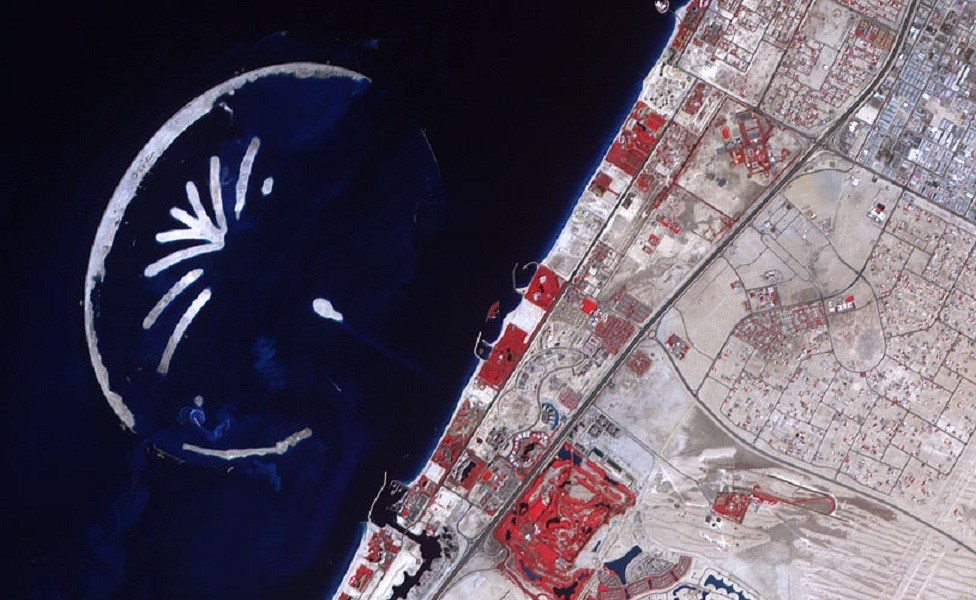
To insure that the island is in its required Palm shape, a private satellite and GPS (Global Positioning System) were used while pouring sand into the sea as the shape of island is nearly curved everywhere and it required pin point accuracy to shape it. The satellite gave coordinates of the point where sand was to be put while the mobile receivers were used as a grid reference for the island. The dredgers would then fill the area of the sea which they were commanded by the satellite. Vibro-compaction technology was used for land reclamation.
Must Read: Dubai Visa Guide for Indian Tourists
Most Popular Dubai Tour Packages

3. A Crescent Shaped Breakwater protects the Island
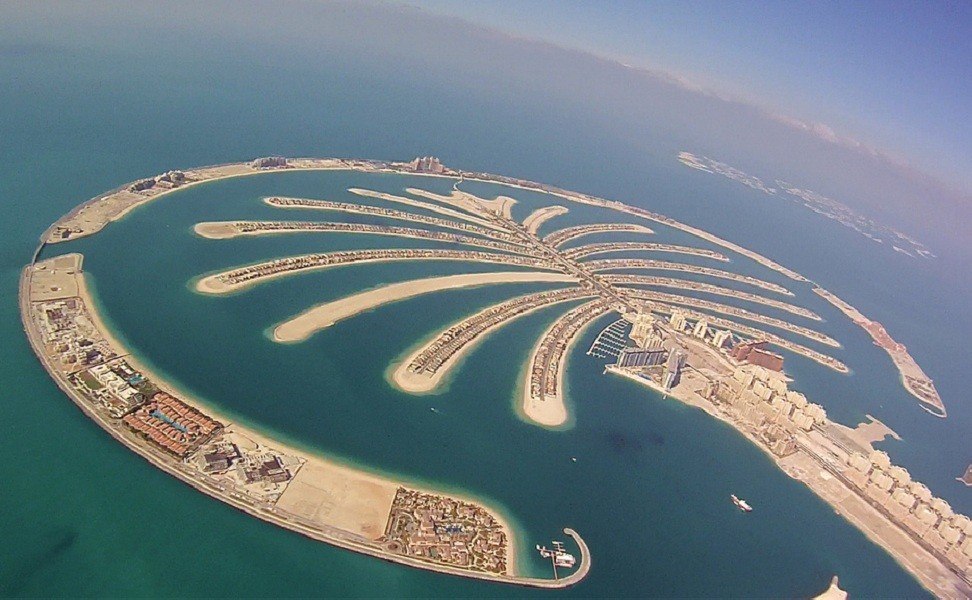
What makes this island an iconic attraction of Dubai is its unique Palm Tree shape with a crescent on its top. This 11 km crescent island was the first section of The Palm to be built, which acts as a breakwater to protect the island from strong currents in case of storms or typhoons. In order to make this breakwater durable, a geotextile membrane, which stops the sand from washing away, was topped by a layer of one-ton rocks, followed by two more layers of rocks weighing up to six tons each. After the construction of the breakwater, engineers realized that fresh water was not circulating properly inside the island branches, and the water was becoming stagnant. Engineers of the Palm Island in Dubai came up with the solution that a 100 m wide opening was added on each side of the crescent to allow water to circulate and prevent it from becoming stagnant. A 6 m-wide boardwalk stretches the length of the crescent and is a top spot for a sunset stroll as part of the Dubai honeymoon tours.
Also Read: 7 Best Beach Destinations in Asia
4. A Monorail connects Palm Jumeirah to the Mainland
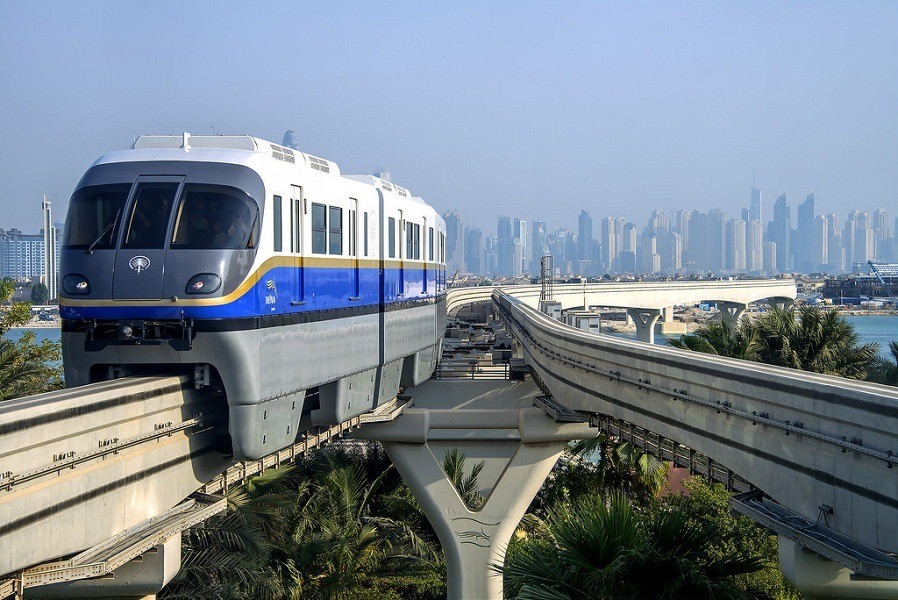
There is a monorail which connects the Palm Jumeirah to the mainland through a 300 m bridge. This is considered the first monorail in the Middle East. Besides, there is a 6-lane underwater tunnel that connects the crescent to the top of the palm. The underwater tunnel was built using 200,000 cubic metres of reinforced concrete, 30,000 tons of reinforcing steel, and 110,000 tons of rock. In order to build the tunnel, a temporary dam was built with two 1.2 km-long dykes, which were later used as temporary roads for construction vehicles. More than 5.5 million cubic metres of seawater were pumped out in just 45 days.
Book Here: Dubai Luxury Packages
5. Built in just Six Years
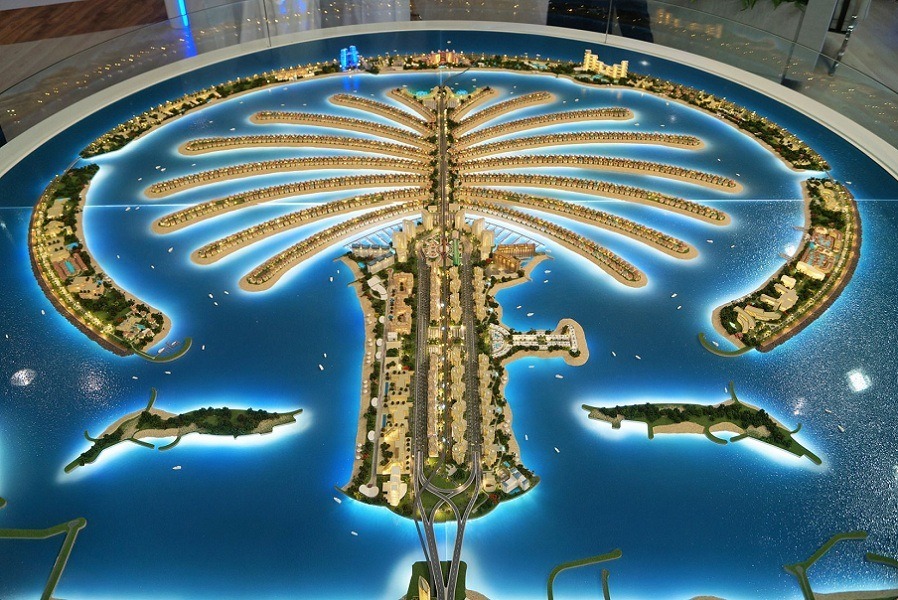
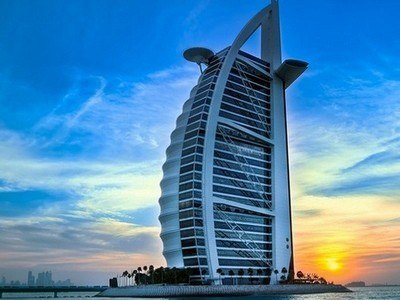
The construction of Palm Jumeirah began in August 2001 and was completed after six years. Today, it is one among the must-include places in Dubai leisure packages as it is home to peaceful beaches, lavish villas, and elegant apartments on its 17 fronds. The Palm Jumeirah boasts of Dubai’s prestigious hotels and resorts, such as Atlantis Hotel, which literally graces the Palm Jumeirah’s crescent, Trump International – a luxurious 300-room hotel at the trunk of the island, Oceana Resort, Kingdom of Sheba, and Exotica Resort & Spa.
Top International Tour Packages
Malaysia Tour Packages
Singapore Tour Packages
Mauritius Tour Packages
Bangkok Tour Packages
Sri Lanka Tour Packages
Most Popular Dubai Tour Packages
Similar posts:
 10 Exciting Things to do in Dubai
 Guide to Dubai: A City Nowhere Near Ordinary
 5 Best Waterparks in Dubai You Must Visit
 11 Most Popular Trekking Sites near Bangalore
 7 Most Spectacular Boat Races in Kerala
 5 Most Popular Pilgrimage Sites in Tamilnadu
 10 Most Popular Places to Visit in Singapore
 10 Popular Ramayana Related Sites to Visit in Sri Lanka
 9 Reasons to Explore Mauritius beyond the Beaches
 Things to know about Dubai Visa for Indian Travellers


3 thoughts on “5 Most Interesting Facts About Palm Jumeirah Dubai”
Comments are closed.