


Virupaksha Temple, Hampi - Timings, History, Architecture, Best Time to Visit



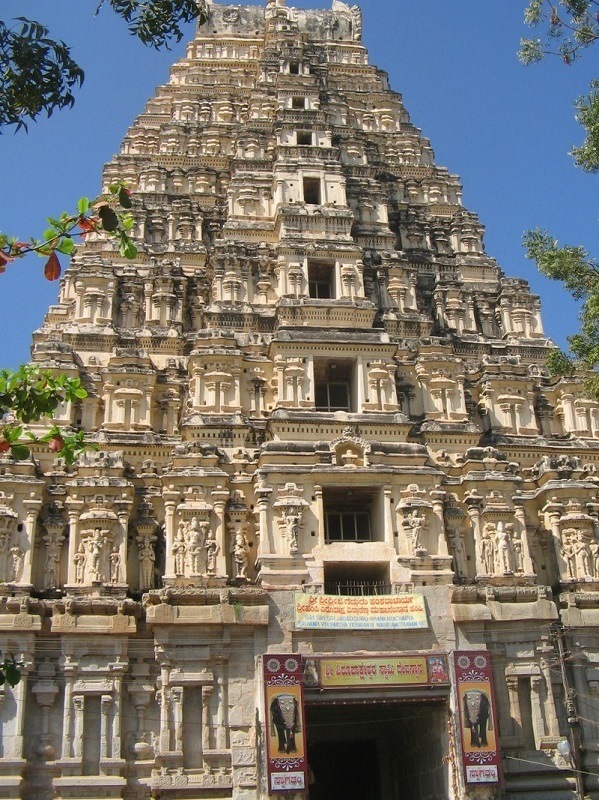
Photo Credit: Flickr

 #2 of 37 Places to Visit in Hampi
 Distance (From Hampi Bus Station): 0.4 Kms

 Trip Duration (Including Travel): 1 Hour

 Transportation Options: Cab / Auto / Rental Bike / Walk/Trek


 Travel Tips: None
About Virupaksha Temple
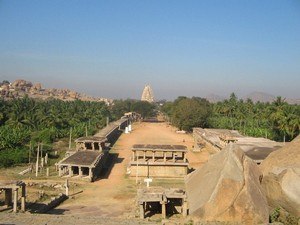
At a distance of 400 m from Hampi Bus Stand, Sri Virupaksha Temple is an ancient Hindu temple situated at the western end of Hampi Bazaar in the historic city of Hampi. Virupaksha Temple is dedicated to Lord Shiva and is renowned as one of the most sacred temples in Karnataka. Virupaksha is an incarnation of Lord Shiva, and among all the surrounding ruins, this temple is intact and is still in use. This temple is also called Pampapathi temple. Situated on the southern bank of the Tungabhadra River, it is part of the Group of Monuments at Hampi, designated as an UNESCO World Heritage Site, and among the must-include places in the Hampi heritage packages.
History of Virupaksha Temple
Considered the most renowned and significant temple in Hampi, Virupaksha Temple has been operational without interruption since its establishment in the 7th century AD, making it one of the oldest functioning temples in India. Initially a modest shrine, it was later expanded during the Chalukyas and Hoysala periods. The temple experienced considerable growth and enhancement during the Vijayanagara Empire (14th-16th centuries), evolving into a prominent religious and cultural hub. The rulers of Vijayanagara, especially King Deva Raya II and King Krishnadevaraya, played a crucial role in the temple's expansion, contributing structures such as the eastern gopuram and the central pillared hall. Although many structures in Hampi were destroyed during the Mughal era, the Virupaksha Temple remained a functioning place of worship. In the 19th century, the temple underwent renovations that restored several of its damaged features.
Architecture of Virupaksha Temple
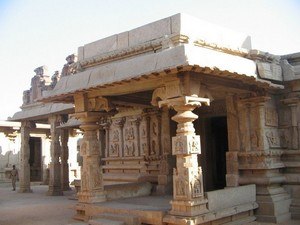
The Virupaksha Temple in Hampi exemplifies the Dravidian architectural style, featuring towering gopurams, detailed carvings, pillared halls, and expansive courtyards. The design of the temple includes repeating patterns, showcasing the architectural and mathematical expertise of the era. The triangular form of the temple and the manner in which patterns are divided and repeated are particularly remarkable.
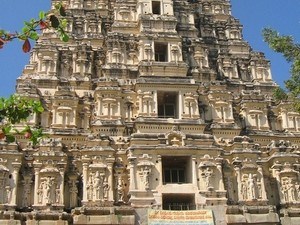
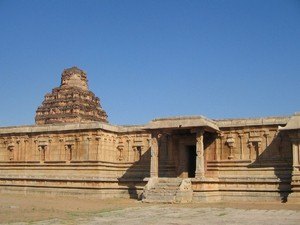
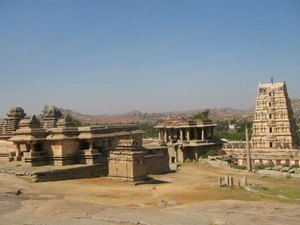
The Virupaksha, also known as the Pampapathi temple, serves as the primary pilgrimage site in Hampi. Currently, the main temple comprises a sanctum, three ante chambers, a pillared hall, and a Mukha Mantapam or Ranga Mantapam. Surrounding the temple are a pillared cloister, entrance gateways, courtyards, attendant shrines, and additional mantapas. This temple features three towers, with the eastern tower reaching a height of 160 feet and consisting of nine tiers, dating back to the first half of the 15th century and renovated in the 16th century by Krishnadevaraya. The northern gopuram has five storeys, while the inner eastern gopuram is adorned with three storeys.
Krishnadevaraya also constructed a Ranga Mantapam in front of the sanctum, enhancing it with Vijayanagar style bas reliefs and murals. This includes representations of several manifestations of Shiva, the ten incarnations of Lord Vishnu, and a classic scene from the Mahabharata illustrating Arjuna shooting the fish device to win Draupadi's hand in marriage. Additionally, there is a mural depicting Vidyaranya, the spiritual founder of Vijayanagar, in procession.
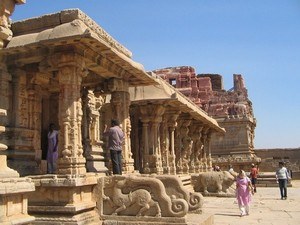
The main Virupaksha temple features two grand courtyards and is oriented towards the east. The first courtyard contains a 100-column hall, which serves as a pillared hall, along with the Kalyana Mantapam located at the far right corner, a ticket counter, a police outpost, administrative offices, and an ancient well. Lord Virupaksha is represented in the form of a Shivlingam, while goddess Pampapathi resides in the inner sanctum, which is encircled by a corridor. There is also a triple headed Nandi statue facing the lord. The Bhuvanesvari shrine within the Virupaksha complex features intricately designed schist pillars of the lathe-turned variety, carved ceilings and door-jambs, and elaborate stone screens with cut-work design. These all features characteristics of later Chalukyan architecture. There is a shrine to Vidyaranya, the spiritual founder of Vijayanagar in this temple.
Light & Sound Show Hampi
The Hampi Light & Sound show, referred to as 'Hampi by Night,' animates the historical ruins through an enchanting exhibition of light, sound, and storytelling. This guided tour recounts the history of the Vijayanagara Empire and the Ramayana period, with a particular emphasis on the Kishkindha kingdom. Featuring music, narration, and innovative lighting effects, the show offers a distinctive experience. It commences near the Eduru Basavanna in Hampi Bazaar and gradually progresses towards the Virupaksha Temple tower. Typically, the show starts at 7 PM and lasts for about one hour.
Festivals of Virupaksha Temple
The Virupaksha Temple in Hampi hosts numerous festivals, with the most notable being the annual Virupaksha Car Festival and the Phalapuja. Commonly referred to as Rathotsava, the Virupaksha Car Festival takes place in March/April each year and features a procession of the deities, Virupaksha and Pampa, on an exquisitely adorned wooden chariot. The Phalapuja festival, celebrated in December, signifies the divine marriage of Virupaksha and Pampa. Furthermore, Maha Shivaratri, occurring in February/March, is another significant festival celebrated at the temple. The Hampi Utsav, a larger cultural festival, also encompasses various events and activities within the temple grounds.
Dress Code & Other Restrictions of Virupaksha Temple
The recommended dress code for the Virupaksha Temple in Hampi emphasizes modest attire in accordance with Hindu customs. Men are encouraged to wear shirt & trouser, dhoti or pyjamas. Women are advised to wear sarees, salwar kameez, or other traditional clothing that adequately covers their shoulders and legs. While not strictly enforced, visitors are generally expected to avoid wearing shorts, night dresses, sleeveless tops, and ripped jeans, especially in the inner sanctums.
Non-Hindus are generally allowed to visit and explore the Virupaksha Temple in Hampi. There are no restrictions based on religion for entry into the temple complex itself, and no one will ask for your religion at the entrance. However, there might be some restrictions on non-Hindus participating in certain rituals or entering the inner sanctum of the temple.
Virupaksha Temple Timings
Monday: 6 AM - 1 PM & 5 PM - 9 PM, & Light & Sound Show: 7 PM
Tuesday: 6 AM - 1 PM & 5 PM - 9 PM, & Light & Sound Show: 7 PM
Wednesday: 6 AM - 1 PM & 5 PM - 9 PM, & Light & Sound Show: 7 PM
Thursday: 6 AM - 1 PM & 5 PM - 9 PM, & Light & Sound Show: 7 PM
Friday: 6 AM - 1 PM & 5 PM - 9 PM, & Light & Sound Show: 7 PM
Saturday: 6 AM - 1 PM & 5 PM - 9 PM, & Light & Sound Show: 7 PM
Sunday: 6 AM - 1 PM & 5 PM - 9 PM, & Light & Sound Show: 7 PM
Virupaksha Temple Entry Fee
General Entry is Free
Special Darshan Available for Rs. 25
Light & Sound Available for Rs. 500
Best Time to Visit Virupaksha Temple
The best season to visit Virupaksha Temple in Hampi is from October to March, as this timeframe offers the most pleasant weather for visiting the temple, as well as exploring the surroundings. Winter often coincides with the Maha Shivratri Festival, and Hampi Utsav, a week-long cultural extravaganza featuring music, dance, and other performances, adding to the festive atmosphere. The summer months can be excessively hot and arid in this area, rendering it less attractive for outdoor pursuits. The monsoon season, which spans from July to September, can result in significant rainfall, making the ascent slippery and difficult.
How to Reach Virupaksha Temple
About 166 Km from Hampi, Hubli Airport is the closest airport that has direct flights from Bangalore and Mumbai. The nearest railway station is Hospet, located 13 Km from Hampi, which is well-served by trains from Bangalore, Hyderabad, Hubli, Chennai, Vijayawada, Tirupati, Panjim, Kolkata, Mysore, Ajmer, Jodhpur, Kolhapur, and Shiridi. Hampi is accessible by road through KSRTC bus services originating from Bangalore, Hubli, Goa, and Karwar. From Hampi Bus Stand, one can reach the temple by a few minutes' walk.