


Jama Masjid, Agra - Timings, History, Architecture, Best Time to Visit



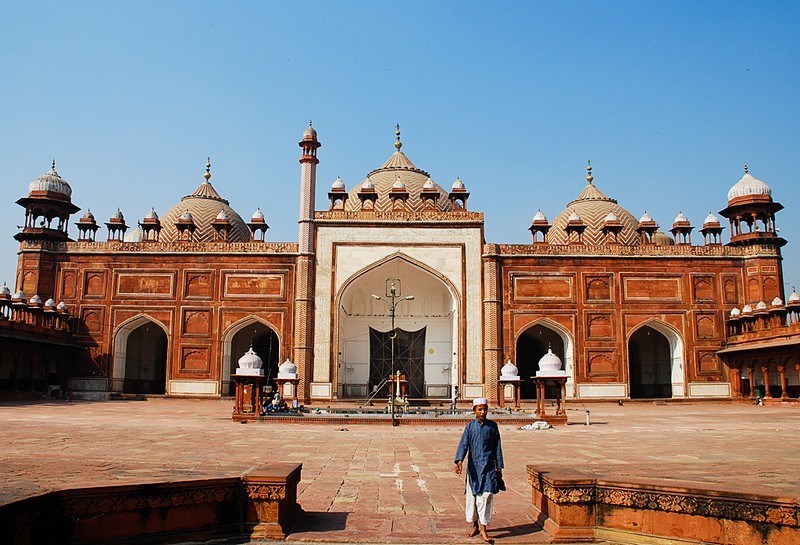
Photo Credit: Flickr
 India | Uttar Pradesh | Agra
 #14 of 26 Places to Visit in Agra
 Distance (From Agra Cantonment): 4.5 Kms

 Trip Duration (Including Travel): 1 Hour

 Transportation Options: Bus / Cab / Auto / Walk/Trek


 Travel Tips: None
About Jama Masjid
At a distance of 4.5 Km from Agra Cantonment Railway Station, Jama Masjid is a 17th-century mosque situated just opposite to the Red Fort in Agra. Popularly known as the Jami Masjid or Friday Mosque, it is one of the largest mosques built by the Mughals in India, and among the well-known places to visit as part of the Agra family packages.
History of Jama Masjid
Jama Masjid was constructed by Emperor Shah Jahan in accordance with the wishes of his beloved daughter, Jahanara Begum, at a cost of Rs 5 lakhs. The mosque's construction commenced in 1643 and was completed in 1648. During the Indian Mutiny of 1857, the mosque's main gate and an enclosure adjacent to its eastern side were demolished by a British garrison stationed at the Agra fort. Initially, the mosque was situated in a large octagonal courtyard known as Tripolia Chowk, which was subsequently destroyed to facilitate the construction of the Agra Fort Railway Station in 1875.
Architecture of Jama Masjid
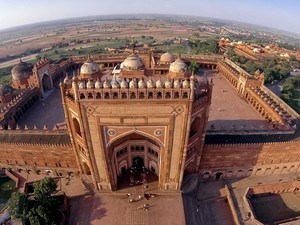
The Jama Masjid is primarily constructed from red sandstone and white marble, which serve as a testament to the splendid Mughal architecture. It is situated on a raised platform and is accessed via a staircase. The mosque features a large elevated courtyard, flanked by arched porticoes to the north and south, with a fountain positioned at its center. The eastern side was previously lined with an arched portico and a grand entrance; however, these were removed by the British in 1857.
The prayer hall is located at the western end of the courtyard and comprises a long rectangular structure topped with three large domes. Each dome is adorned with inverted lotus and kalash finials at the apex. Five archways connect the prayer hall to the courtyard, with the central archway being highlighted by a large iwan portico and a white marble facade featuring Persian calligraphy. Two slender minarets, embellished with a zigzag design, once flanked the central archway, but the minaret on the right side has been destroyed. A series of chhatris adorn the top of the facade.
Inside, the western wall showcases a stunning mihrab and pulpit crafted from white marble. The Persian inscription, inlaid with black stone on the archway of the central portal, pays tribute to Jahanara Begum and Shah Jahan. Every Friday, a significant number of Muslim devotees gather here to perform their weekly prayers.
Festivals of Jama Masjid
The Jama Masjid in Agra, referred to as the Friday Mosque, is renowned for its unique Namaz on Fridays, attracting a significant number of devotees. This day is the sole occasion when the mosque experiences large crowds, while the other days remain relatively quiet and peaceful. Only Muslims are permitted to enter during prayer times. Additionally, the mosque serves as a venue for various social gatherings and religious ceremonies, particularly during festive occasions. Although it is not a festival in itself, it plays a pivotal role in celebrations such as Eid.
Dress Code & Other Restrictions of Jama Masjid
Visitors to Jama Masjid Agra are expected to dress modestly. Both men and women are required to cover their arms and legs. Women may also be required to cover their heads, and robes are typically available at the entrance if necessary. Visitors are advised to avoid wearing modern clothing such as mini-skirts, shorts, and sleeveless tops while visiting the mosque.
Non-Muslims are encouraged to refrain from visiting the mosque during prayer times, especially on Fridays, in order to show respect for the worshippers. Additionally, it is customary to remove footwear prior to entering the mosque's main prayer area.
Jama Masjid Timings
Monday: 7 AM - 12 PM & 1:30 PM - 6:30 PM
Tuesday: 7 AM - 12 PM & 1:30 PM - 6:30 PM
Wednesday: 7 AM - 12 PM & 1:30 PM - 6:30 PM
Thursday: 7 AM - 12 PM & 1:30 PM - 6:30 PM
Friday: Closed for Non-Muslims
Saturday: 7 AM - 12 PM & 1:30 PM - 6:30 PM
Sunday: 7 AM - 12 PM & 1:30 PM - 6:30 PM
Jama Masjid Entry Fee
Entry is Free
Best Time to Visit Jama Masjid
The best time to visit Jama Masjid in Agra is during the cooler months, specifically from November to February, when the climate is pleasant, and suitable for exploring the site. The monsoon season, which lasts from June to September, may bring intermittent rainfall, which might make travel less comfortable. The summer months can be excessively hot, with temperatures exceeding 40°C, rendering sightseeing uncomfortable; thus, it is recommended to avoid visiting Agra during this period.
How to Reach Jama Masjid
Agra is well connected by air, train and road. The nearest airport to reach Agra is Kheria Airport, located at a distance of 9 Km from the city and is connected to Delhi, Varanasi, Khajuraho, Gorakhpur, Jabalpur, Rajkot and Jamnagar. The city has four major railway stations - Agra Cantonment, Raja Ki Mandi, Agra Fort and Idgah Agra Junction. It has trains from Mumbai, Delhi, Amritsar, Hyderabad, Vizag, Chennai, Indore, Jammu, Jabalpur, Pondicherry, Chandigarh, Kalka, Hubli, Goa, Haridwar, Bhopal, Howrah, Patna, Dehradun, Bangalore, Allahabad, Jaipur, Trivandrum and Lucknow. Agra can also be reached by road from Lucknow, Kanpur, Delhi, Ahmedabad, Gwalior, Noida, Dehradun, Jaipur, Jodhpur, Indore, Haridwar and Vrindavan. Tourists can reach Jama Masjid by using electric buses, cabs, and auto rickshaws from all parts of the city of Agra.